Characters · lgbt · mogai · Uncategorized · writing

Going Over the Rainbow: The Gender Divide

Most of us go through life never thinking much about our gender or how we express it. We might feel it is something we were born with, something absolute and  immutable. We might think there are only two genders and that we are one or the other.

‘But aren’t there only two genders?’ I hear you asking.

Nope. Male and female are only two ends of a vast spectrum. Also it helps not to confuse gender with sex. Sex is biology/physiology and even then there are intersex persons whose bodies are not clearly one or the other.

“When we think of gender, we often think of male or female; that’s only half of understanding gender. The denotations of male and female actually refer to biological and physiological sex. Gender is a sociological construct of values, ideals, and behaviors about what it means to be either male or female, and are often regarded in terms of masculine or feminine, respectively. Many people use sex and gender interchangeably, but one does not have to be male to identify as masculine, and vice versa.”

-Boundless. “Context of Culture and Gender.” Boundless Communications. Boundless, 21 Jul. 2015. 

In addition to exploring the sexual orientations in the coming months we’ll be looking at different gender identities . We’ll discuss gender identity and expression and how you can use these to make your characters more diverse.

‘Why? Can’t I just have my character be male or female?’ You ask.

Of course you can but you’re here so you’re obviously interested in being more diverse in your writing.

The Culture of Gender

Ripley, the main character in Alien originally was to be male.

Have you ever thought about how your favorite book or movie might have been different if the main character had been a different gender? What would have made it different? Why?

In our society (I’m speaking as someone who lives in the US) identifying as male or female comes with a host of gender specific expectations: men are macho, women are feminine, men don’t cry, women are emotionally compromised, men like cars, women like shoes, ad nauseam.  These gender stereotypes are social constructs and have little basis in biology or psychology.

“Gender theorists point to the variations in gender roles observed among different cultures in arguing that gender – our masculinity or femininity – is a social construct rather than an innate biological characteristic. Because there is no universal “right” way to be a man or a woman, they argue that our ways of “doing gender” are shaped by social cues and influences.”

Dr. Abby Palko

This is why we as writers need to be more cognizant of the variety around us.  Challenging these stereotypes can help us broaden our social consciousness and that of our readers.

‘But why should I worry about gender when I only write men or women?’ You wonder.

Because even cisgendered persons, or persons whose gender identity aligns with their gender assigned at birth, are impacted by society’s gender culture and expected to conform to certain norms. It’s not enough to  throw a bunch of ‘masculine’ traits into a character’s personality and call her a ‘strong’ female. And conversely taking a female character and switching to masculine pronouns won’t give you the sensitive male you are looking for. They each will have skin-deep traits and no real depth to them.
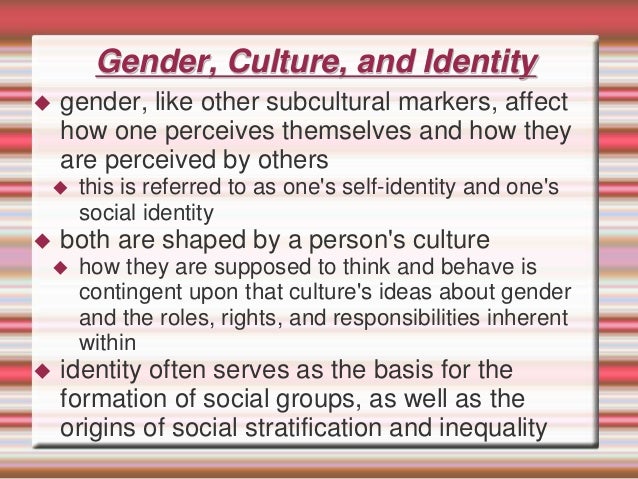
Sex and Gender: A Cross Cultural Perspective

It’s my hope that you’ll find the following articles interesting and maybe a little enlightening as we study the wide variation of genders and sexualities and how we can accurately write these identities.

If you enjoyed this and would like access to additional content, please consider supporting me on Patreon

Do you struggle writing a certain gender? Why do you feel that is the case? Have you ever written a character and then decided to change their gender? What prompted the change and how do you feel it turned out?


book review · Books

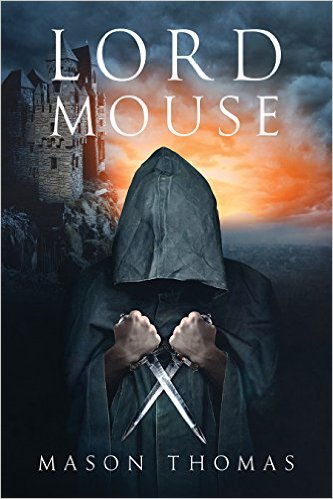
Queer Lit Book Review: Lord Mouse

51k57fr9tfl-_sx331_bo1204203200_

I’ve been reading a lot of great books lately but it’s been a rare thing to find a book that hits all my literary kinks.

I’ve been searching for well crafted fantasy with queer characters for so long I almost decided to write something myself. Then I happened upon a review by Just Love that sounded promising.

Boy did it deliver.

Lord Mouse is everything I’ve been lusting after in a fantasy novel. The main character is Mouse, a tiny little badass thief and assassin, and no he doesn’t have a heart of gold but he does pride himself on a job well done. If you can afford him. He’s never failed a job and when he gets a chance at a challenging job that pays more coin than he’s ever seen he’s not about to turn it down.

And that’s exactly what gets him into trouble.

Thomas does a fantastic job at throwing you right into Mouse’s world and a dark, dirty, gritty world it is. Thomas takes you from the cruel criminal underbelly, up the rungs of the social ladder in a way that feels natural, but not too easy. Mouse has to work for his contacts and information and sometimes it’s a blade and sometimes it’s a bed.

As an asexual I’m not a big fan of casual hook-ups but the sex scenes were never gratuitous and were mostly fade-to-black moments. This was something I appreciated. The story was about Mouse’s character growth, not about sexual escapades.

It was also very refreshing to read a book where being gay wasn’t something to angst over. It was just treated as part of who he is, which in my opinion, is as it should be.

I loved getting to know Mouse but I sincerely wish the story had been longer and I think it should have been. The first act is spent getting Mouse into position to do this big rescue mission and then we spend the next act of the book with him trying to escape. I did enjoy it very much, but I felt the last third was rushed and would have liked to have seen Garron and Mouse get to know each other better before the end. The big reveal at the end could have packed a lot more punch had we had a chance to get to know Garron better.

Ideally the rescue could have happened by the end of the first act and the second act could have had a longer build up to the finale. I feel that a longer second act would have helped with the rushed feel to their relationship and the finale. I would have happily read 80-100K words of these two.

I was also disappointed with the copy editing and found a few instances where a side character’s name was misspelled from one page to the next, which wouldn’t have been a big deal but it threw me out of the story for a moment as I tried to figure out who was being mentioned.

Overall, these issues were minor and I thoroughly enjoyed the story and am eager to read anything else Thomas writes.

Characters · gay romance · lgbt · mogai · writing · Writing FUNdamentals

Going Over the Rainbow: Crush Those Stereotypes

Get rid of stereotypical characters as easily as Dorothy got rid of the Wicked Witch of the East.

There is a lot of great advice out there when it comes to creating our characters. From Nancy Kress’ Dynamic Characters to The Positive and Negative Trait Thesaurus by Angela Ackerman and Becca Puglisi there are many excellent resources for writers looking to create truly unique and realistic characters.  Even as comprehensive as these helps are, there is one area many writers neglect.

A character’s sexuality and sexual orientation.

‘But I don’t write romance!’ I hear you saying. Romance isn’t always about sex and sex isn’t always about romance.  A character’s sexual orientation can have a huge impact on how they are treated by society, their family, how they interact with others around them and how they perceive themselves. It can be a source of both internal and external conflict.

‘But I only write straight characters!’ You say.  Okay, nothing wrong with that, but why? Why only write straight characters?  It’s almost guaranteed that you personally know, at the very least, one person of a different orientation and the likelihood is that the number is much higher. Our lives are filled with diversity and it stands to reason that our stories should be as well.

Diversity is a huge buzz word right now in the entertainment industry and while there is a great focus on it, the actual results have been marginal at best. Unfortunately some well-meaning writers have perpetuated harmful stereotypes, misrepresented an orientation or been less than accurate in their portrayals of queer* persons.

So how can you add diversity and be inclusive without stumbling into the stereotype trap?

Click your heels and we’re on our way.

The first step is to realize writing diversity is not hard. Writing a queer character is no harder than writing any other character because, first and foremost, you are writing people; not an orientation.  A lesbian is not just a lesbian, she might also be a sister, mother, accountant, scientist, police officer, volunteer firefighter or any number of things that make up someone’s identity. Her orientation is just one aspect of who she is, but it is something that helps define her, just as core traits help define personality.

Fearless Defenders #12

The second step is to decide if the character’s story is one for you to tell. As I stated last week, some stories need to be told by writers from that particular background. We should recognize when a character’s story might not be ours to tell, especially if the story centers on experiences or hardships related to their race, orientation, physical ability or mental health.  As the term goes, stay in your lane. In other words know when to check your privilege and don’t assume any amount of research is going to give you true insight into their struggles. Instead, support authors who are part of those diverse backgrounds.

Kaidan Alenko is a romanceable option for Commander Shepard in Mass Effect 3

With that being said, there is nothing wrong with including diverse characters. You absolutely should.

The final step in writing with diversity is actually creating a character that is a fair representation. Everyone’s experiences are going to be different and there is no one right way to write a queer character. However, there are most definitely wrong ways to write them.

Over the next several months I will be going through both the sexual orientation spectrum and the gender identity spectrum and helping you to avoid stereotypes and harmful misinformation. My goal is to help you not only understand your characters better but to feel more comfortable writing with diversity. I myself am a queer person. I identify as an agender/nonbinary panromantic demisexual. That’s probably is a bunch of gibberish right now, but I promise, if you stick with me I’ll show you what those labels mean and what they can mean for your character.

The first place we are going to start with is the Character Sexuality Worksheet. I designed this worksheet to help you answer orientation specific questions about your character. This should give you a launching point for your research. I’ve also included two handy flowcharts to help in case you are not sure where on the spectrum your character might fall.

Character Sexuality Worksheet

Please feel free to download and print the worksheet for your private use.

Over the next several months I will be exploring each of the various sexual orientations and gender identities in an effort to help my fellow authors write with more diversity. I will be inviting people of other orientations and gender identities to offer their advice and experiences as well. I sincerely hope you find this of value and please feel free to ask questions.

If you enjoyed this and would like access to additional content, please consider supporting me on Patreon

What orientation you are most curious about? What else would you like know about sexuality, sexual orientation, and gender identity? Have you written a character from the sexual orientation spectrum?  What challenges have you encountered in your effort to add diversity to your writing? Do you have any suggestions or comments for the worksheet or upcoming topics? I look forward to hearing from you.

*As someone who identifies as nonbinary and panromantic demisxual, I am comfortable using the term queer when describing myself or my characters. I am aware that many in the community still feel this is an insult. If you do not identify as part of the spectrum, please refrain from using the term.

Characters · gay romance · lgbt · mogai · writing · Writing FUNdamentals

Going Over the Rainbow: Moving Beyond the LG in LGBT.

Growing up in small towns in the middle of the Midwest, I didn’t get much exposure to people of other races.  There was not a single African American at the school I went to and only one person of mixed race.  I also had no exposure to people who identified as different sexual orientations or gender identities. This meant I felt horribly out of place growing up. I was just weird. It’s taken twenty years, but I’ve finally found where I fit and understand myself. I’ve also learned a lot about others along the way.

Last month Jami Gold brought up the subject of diversity on her blog.  Diversity is a huge topic right now, and it should be. We need more diversity in every genre.  And by diversity I don’t just mean racially, but sexual orientation, gender identity, neurodivergence, physical ability, all of it. However, we need to when and how to add it so it fits and doesn’t feel tacked on. There is no quota, only authenticity.

This is a good thing when it comes to our characters, especially for characters with diverse elements, as there’s no definitive black, gay, disabled, whatever experience, and therefore there’s no “one right way” to portray those characters. There are, however, wrong ways to portray diversity.—Jami Gold, Writing Diversity: How Can We Avoid Issues?

In a follow up post, Jami also touched on research and being aware of the source of our information. There are plenty of resources on the internet but we need to be aware of who is supplying them and if they are actually part of the segment of the population they are writing about. This can make all the difference in whether or not our portrayal is authentic or othering.

Some stories simply are not ours to write.

Obviously, the most helpful thing we can do to support diversity within the publishing industry is to buy and help promote books from diverse authors. As I mentioned last time, there might be some stories that aren’t ours to tell, so we also need to encourage the success of those authors who can tell those stories.—Jami Gold, Digging into Research: Consider the Source

I write stories with queer* characters and yes many of them are not white, but their race and queerness is part of who they are and the stories are not about either. As a white person it is not my place to write a story about race or racism. It might happen in my stories, but it won’t be the focus because I have never had to deal with it the way so many others do. I cannot and will not write something when I know it is a subject that does not belong to me. No amount of creativity can replace experience with something like this.

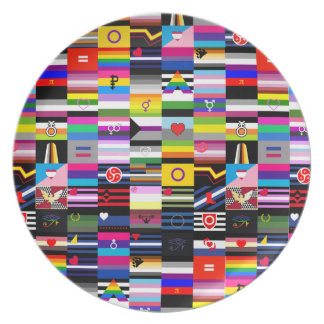
And that leads me to the point of this post.  As a queer person I have noticed a lot of authors struggling to write authentically queer characters. The gay romance genre is stuck in the m/m cis white male, coming out trope (not that there is anything wrong with the trope, but … diversity would be nice ^^). That is only one small part of the entire spectrum. The rainbow flag is not the only flag out there. Whether you write romance or not, adding other orientations can only enrich your writing. When done properly.

Pride Flag Collage

Over the next several months I will be exploring each of the various sexual orientations and gender identities in an effort to help my fellow authors write with more diversity. I will be inviting people of other orientations and gender identities to offer their advice and experiences as well. I sincerely hope you find this of value and please feel free to ask questions.

If you enjoyed this and would like access to additional content, please consider supporting me on Patreon

As always your comments and questions are welcomed below. 

*As someone who identifies as nonbinary and panromantic demisxual, I am comfortable using the term queer when describing myself or my characters. I am aware that many in the community still feel this is an insult. If you do not identify as part of the spectrum, please refrain from using the term.