Uncategorized · writing · Writing FUNdamentals

When It’s More than Writer’s Block

Writing While Mentally Ill


As a writer have you ever gone back and reread an old work and thought, ‘Wow, who hurt you?’

The last few months I’ve been working on writing the sequel to one of the first books I ever wrote and published. It’s been proving to be exceptionally difficult. There are no less than five different versions sitting in my hard drive. And this latest attempt is yet another rewrite. Yet again, the story seems to be fighting me at every turn. I knew going in that the main character is mentally draining to write. But that hasn’t felt like it’s been the case recently. It’s felt deeper than that.

After a convo with my sprint partner a couple of weeks ago, I did some thinking and came to a realization. 

(Trigger warning for discussion of suicidal ideation, depression and suicide attempt.)

Where it Began

When I first started writing this book, I was a new mom and on strict bed rest due to nearly dying during delivery. I didn’t realize it at the time, but I was suffering from rather severe postpartum depression. In order to deal with my emotional turmoil, I began writing. I created a character who I could put through all the torment I felt I deserved. This poor boy was aptly named Sorrow. He became my vessel for all of my insecurities and trauma I’d endured growing up. It helped for a time.

When my middle child was almost two, I attempted to commit suicide at work. This led to a hospitalization and finally a diagnosis. But it would be another five years before we found a mix of medications that help keep me balanced mentally. I’ve been through therapy. I had a relapse and went back into the hospital for a short time. My lovely psychiatrist helped me learn coping mechanisms. I still have bad days, but I no longer sit and daydream about dying or about how much better off everyone would be if I was gone. I’ve continued to write. I still love tormenting characters, but not to the degree I did to Sorrow.

So when I realized last week the reason this story is fighting me so hard, it was a surprise but also a relief of sorts. 

I can no longer write Sorrow the way I did. I no longer want to hurt myself and by extension him. I deserved better and so does he. In light of that, I’ve decided to take the sequel in a totally different direction than I’d originally intended.  I won’t spoil it here for you. ^_~

Staying Sane as a Mentally Ill Writer

Writing is mentally taxing, no matter who you are or what you write. At some point or other, nearly every writer deals with the dreaded writer’s block. That seemingly insurmountable hurdle to keep putting words down on the page. And every writer has their own way of dealing with it. However, for a writer who is neurodivergent (I use this term as I feel it is more inclusive and has a less negative connotation than the phrase mentally ill) it can be especially frustrating.

For me, anxiety and depression can combine to create a perfect storm of feeling both upset I can’t get anything down, that I’m disappointing my readers, and conversely, feeling like it wouldn’t matter anyway as I’m nothing but a fraud trying to trick people out of their hard earned money. 

Ouch.

That’s not true. Of course it isn’t true. But my serotonin starved brain likes to insist otherwise. This is when I have to be especially gentle with myself.  Following are a few things that I’ve found help me when I’m in a slump and ways I’m working to avoid them in the first place.

My biggest piece of advice is this: pain and/or suffering doesn’t not make a person more creative or a better artist. The whole concept of the tortured artist needs to die a fiery death. Health doesn’t define who you are and it shouldn’t define you as an artist either. If you are struggling, get help. I became a much better person and writer once I got help and learned to harness those demons instead of letting them run rampant.

Being neurodivergent doesn’t automatically make my writing deeper or more relevant than a neurotypical author’s work. In some ways, it can be less relatable to the average reader because of my perspective.

Here are six ways I’ve been trying to help myself:

  1. Seek Professional Help

    My first piece of advice is to get help. If you are struggling with symptoms that make day-to-day living a challenge, please talk to your doctor. I will also list various resources for you at the end of this article. The Suicide Prevention Hotline literally saved my life. 

    1. Practice Mindfulness

    Try to stay self aware. If something you’re working on is making your symptoms worse, it might be time to pull back and think about why this is the case. This is especially true if you’re writing about a neurodivergent character. As the article Tips for Writing With and About Mental Illness states: “Suddenly, you’ve stopped arguing with mental illness, and you’ve started collaborating with it.Writing about mental illness can sometimes become a conduit for mental illness” (Wortmann, F. (2021, September 10). Tips for writing with and about mental illness. Psychology Today. Retrieved October 13, 2024, from https://www.psychologytoday.com/gb/blog/triggered/202109/tips-for-writing-with-and-about-mental-illness).

    1. You are More than Your Illness

    Just as you are not solely your illness, neither is your character. While at times it can feel all consuming, it is only one part of our whole selves. And not everyone will have the ability to understand our character any more than they can understand our experiences. Some things simply have to be experienced to be understood. 

    1. Take Breaks

    If your current work is making your symptoms worse, don’t be afraid to put it down and walk away for a bit. Work on something different. This is why I like to have several projects going at once. It gives my brain a break from writing emotionally challenging characters to write something lighter. Or I refill my creative well by reading, watching movies or gaming. It is all part of the process and don’t let anyone tell you different.

    1. Try New Things

    If writing has become truly challenging, it might be time to try a new creative outlet for a while. Allow yourself to explore other mediums. This can also relate to #4 in that it gives your brain a new challenge and can actually help you when you get back to your writing.

    1. Don’t Isolate

    We tend to withdraw when we’re struggling. This is the last thing we should be doing. This is when we most need to reach out to others. Even if it’s just joining some writing sprints on a Discord server or going to a local writers group meeting, do something that involves other people.  

    You’re more than welcome to come join my server. We typically do sprints together on Saturday and Sunday evenings. https://discord.gg/4uPCWEFRJp  The Novlr website also has a community tab and a Discord Server.  They hold writing sprints through the week. (www.novlr.org). Scribophile is another great website if you’re looking for help and feedback too. (https://www.scribophile.com/

    I hope you find these points useful. If you have your own methods I would love to hear about it in the comments!

    Here are some useful links from the National Institute for Mental Health :

    Call or text 988 or chat online  to connect with a trained crisis counselor. The Lifeline provides 24-hour, confidential support to anyone in suicidal crisis or emotional distress. You can reach a specialized LGBTQI+ affirming counselor by texting “Q” to 988 or by calling 988 and pressing “3.”

    If you are a veteran, consider using the Veterans Crisis Line.

    Call 988, then press “1.” You can also text 838255 or chat online . The Veterans Crisis Line is a 24-hour, confidential resource that connects veterans with a trained responder. The service is available to all veterans and those who support them, even if they are not registered with the VA or enrolled in VA healthcare.

    Learn more: Veterans Crisis Line  (disponible en español )

    Disaster Distress Helpline. Call or text 1-800-985-5990. The Disaster Distress Helpline provides immediate crisis counseling for people experiencing emotional distress related to any natural or human-caused disaster. The 24-hour, confidential helpline offers interpretation services in more than 100 languages.

    The following professional organizations have directories or locators on their websites for finding mental health professionals:

    National advocacy organizations provide information on finding mental health professionals, and some have locators for finding a therapist on their websites. Examples include:

    
    			
    writing

    The Blank Page

    writer working on typewriter in office
    Photo by Andrea Piacquadio on Pexels.com

    I’m sitting here staring at a blank white screen trying to write and all I want to do is crawl back in bed … at 10:30 am on a Sunday. It’s stormy outside so that’s a good excuse. Right? But it feels like I’ve had months worth of excuses not to write. Strike that … years. I haven’t actively written anything but some mediocre poetry in over a year.

    Okay, hold on. I’m being a little hard on myself. There’s been COVID, getting thrown into homeschooling, dealing with an abusive relationship, raising 3 kids (and multiple fur babies) on a limited budget, living in a much too small and much too old house, and dealing with having bipolar schizoaffective disorder.

    So many excuses, might be what crosses your mind. It certainly does mine. But if anything they are reasons why writing hasn’t been happening. Even when I did get free time, I’d spend it playing video games with friends or watching Netflix and YouTube. If I did open a doc to write in, I’d just stare at it mind as blank as the page and wonder where my creativity had gone.

    Well, I think I know where it went. It went into helping my very social 7-year-old cope with suddenly not being allowed to see their friends. It went into helping my 12 year old navigate their newfound gender identity. It went into planning inexpensive meals every week. It went into finding ways to keep 3 kids occupied for month after month of lock down. When I did have some to spare, I very gladly spent it on playing D&D with friends, something that has become a lifeline for me.

    I haven’t been writing, but I’ve been oh so creative in so many other ways. Ways that kept me sane and my kids happy.

    And I think that’s worth a few blank pages.

    writing

    Should Authors Use Trigger Warnings?

    R-rating-300x168

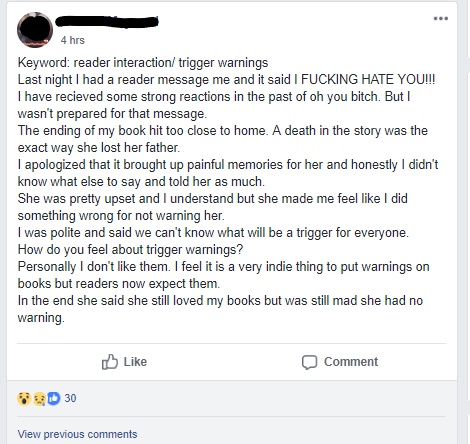
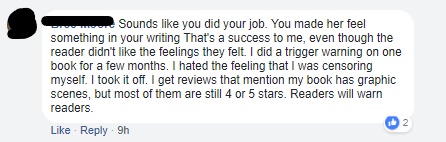
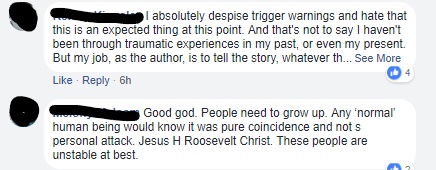
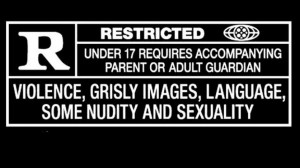
    An interesting comment came up in one of my Facebook author groups. One of the authors commented and said they’d been contacted by an irate reader who was upset about the ending of their book. They then asked the group if they should include trigger warnings in the future. The response so far, with a few dissenters, has been a resounding no, with many commenting that they ‘don’t do trigger warnings.’

    2018-05-24 (1)_LI

    Now, I am not condoning author abuse. And the reader mentioned could have handled the matter without resorting to cursing at the author and instead used it as a teaching moment. No one should attack an author in reviews, social media or email. There are ways to air grievances or address problematic elements in books that don’t involve hate-filled speech.

    But what is a trigger warning and why should we as authors be concerned about them?

    First, it became very clear, very quickly that nearly all the authors in the thread have the wrong idea about why trigger warnings are needed.  So what is a trigger warning?

    A trigger warning is a statement at the beginning of a piece of media that alerts the viewer/reader to the sensitive material contained within that could be potentially distressing or harmful.

    It is much like the ratings that the MPAA, ESRB and MRS provide movies, video games, and comic books. It is to inform their consumers of content and allow them an informed decision. Trigger warnings can help a reader understand that a book is going to contain certain material and allow them to make an informed choice as to whether or not that material is for them.

    Trigger warnings are not frivolous, ‘indie,’ or for those seeking special treatment. They are legitimate warnings that can help someone avoid undue stress that can lead to major problems especially for those with mental health issues.

    Trigger warnings are potentially lifesaving for people who have dealt with traumas like sexual assault, hate crimes or violence. Eliminating these advisories and zones on campus suggests that someone should have to listen to someone who questions their humanity or experience.

    This kind of insensitive rhetoric also implies that mental health issues or traumatic pasts ― those that require a safe space or a trigger warning ― render a student weak. And that type of attitude silences those who may be struggling.

    Let’s play a game.

    You click on the links below.

    Here.

    Here.

    and Here.

    Don’t want to?

    Why?

    Because you don’t know what’s actually behind that word do you? You have no idea if I’m linking you to porn, a picture of kittens, or a virus.

    If you clicked on through you’re a braver person than I. Or maybe you have a software plug-in installed that tells you what the link is when you hover over it. Chrome does this automatically in a small box at the bottom of the page.

    Guess what. That’s your warning. You didn’t want to chance a nasty surprise on the other end of that link. Why? Because you want to keep your computer and yourself safe.

    That’s all trigger warnings are for. Keeping people safe. It’s not about ruining the plot or spoiling things for your reader. It is about allowing people to make informed decisions. It is not about limiting you or what you write. It is not about you. It is about your reader who suffers from PTSD or other trauma-induced anxiety, it is about your reader who is a rape or domestic violence survivor. It is about your reader who lives with a major mental illness like depression or anorexia.

    We would never do anything to deliberately hurt or cause our readers distress and yes we want them to enjoy the emotional highs and lows of our plot, but not at the expense of their mental health.

    Warning: The following contain strong abelist rhetoric.

    2018-05-24 (10)_LI

    2018-05-24 (8)_LI

    Using trigger warnings is not censoring your writing. You are welcome to write the darkest, goriest, most unsettling and depressing thing ever. Just please say so. Leaving it to reviewers is unfair, insensitive, and lazy.

    It is not about being ‘offended’ or upset about a plot development. It is genuine acute distress brought on by reliving a past trauma that can manifest as an anxiety or panic attack, suicidal ideation, depression and so on. There is a major difference in having an emotional impact on your reader and triggering them into an episode.

    “Squirm,” and “discomfort,” for example, do not accurately capture the sensation of white heat, rapid heartbeat, the feeling that you are about to die or vivid flashbacks of assault.  Many administrators and professors feel that students need to grow a “thicker skin.”  A marginalizing “sticks and stones” understanding of what “counts” as “real” pain is evident not only in the statements of many professors, but in the large number of comments that quickly followed the Times piece, where readers categorized trigger warnings as “coddling” a “weak” “victim-mentality.”

    Additionally, the idea that any trigger warnings constitute censorship is not only incorrect but also definitively misleading. In most cases, no one is saying professors cannot teach texts or show videos. Nor do warnings imply some sort of apology for lessons to follow. Nor, in the interesting choice of words of one professor quoted in the Times piece, do trigger warnings mean that students “should not be forced to deal with something that makes them uncomfortable.” Warnings seek mainly to give students information they need in order to decide whether or not to take or stay in a class.

    What’s Really Important About ‘Trigger Warnings’ By Soraya Chemaly (https://www.huffingtonpost.com/soraya-chemaly/trigger-warnings-college-new-york-times_b_5359276.html)

    When and How to Use Trigger Warnings

    So we’ve established that no one wants to censor you and you’re not spoiling anything for anyone so what next? Many authors seem very confused on when and how to actually use trigger warnings. Here are some questions to ask yourself:

    • Does my plot contain sensitive topics like abuse, domestic violence, racism, homophobia, suicide or rape?
    • Do my characters experience abuse or suffer graphic violence on the page?
    • Do any of my characters suffer from a mental illness?
    • Do any of my characters die in the course of the plot?
    • Do any of my characters struggle with substance abuse?
    • Are there any graphic scenes of violence or sex that are not expected in the genre or not covered by the blurb?

    If you answered yes to any of these you owe it to your reader to use a trigger warning. I am not saying give away your plot. There are very simple and easy ways to include trigger warnings without spoiling anything for anyone. You aren’t going to list every trigger you can think of, obviously. Just the ones that pertain to your story. It is as easy as just saying: major character death, suicide, rape.

    My book The Jeweled Dagger contains the following after the blurb:

    Trigger warnings for: verbal abuse, transphobia, character death, attempted rape, homophobia.

    Now, do you know what the book is about? Have I spoiled the plot for you?

    Not likely. The words, while providing all the information you need, do not spoil the plot for you. If you feel that I have taken away anything from your reading experience by listing these then I’m not sure why you bother with blurbs either.

    Those of us who occasionally use trigger warnings are not as naïve as we’re made out to be; we understand that there is no magical warning that will assuage all anxieties and protect students from all traumas, nor is there a boilerplate trigger warning or trigger warning policy that professors can be reasonably expected to follow formulaically. Rather, trigger warnings are, in practice, just one of a set of tools that professors use with varying degrees of formality to negotiate the give-and-take of classroom interactions. If you take away the media hysteria surrounding trigger warnings, you’re left with a mode of conversational priming that we all use: “You might want to sit down for this”; “I’m not sure how to say this, but…” It’s hardly anti-intellectual or emotionally damaging to anticipate that other people may react to traumatic material with negative emotions, particularly if they suffer from PTSD; it’s human to engage others with empathy. It’s also human to have emotional responses to life and literature, responses that may come before, but in no way preclude, a dispassionate analysis of a text or situation.

    The P.C. backlash and the trigger-warning backlash hold a common fallacy: They see pushback from the margins and mistake it for threats to the most institutionally powerful.

    —The Trigger Warning Myth by Aaron R. Hanlon (https://newrepublic.com/article/122543/trigger-warning-myth)

    (Emphasis mine)

    We as authors get a lot of grief from all sides and it is understandable that having to account for yet another thing on our to-do list seems counter-productive. It is perfectly understandable that we want our readers to be surprised by plot developments. But we lose nothing by listing a simple warning. We may even gain more readers.


    Characters · writing · Writing FUNdamentals

    Blood on the Keyboard: Writing When it Hurts

    Blood on the

    Okay, so that title is a *little* misleading. I’m not talking about actual blood. Unless you’re like me and tend to have random nosebleeds. Not good for your keyboard. No, the hurt I’m referring to is more emotional than physical. But how so?

    You’ve no doubt come across the adage to ‘write what you know’ and likely the opposing viewpoint that this is limiting to your narrative.

    However, I’m going to give you a different take on this. Write what you feel. Here’s some overshare for you: I use writing as a coping mechanism to keep my brain from talking me into killing myself. Sometimes that nastiness bleeds over into my writing. Characters suffer and suffer horribly. Mostly because they are a stand-in for myself. I won’t get into the psychology of it. My doctors are aware and even encourage it. Why?

    Because it gets those emotions out of my system. It allows me some space from it to look at it rationally.

    Now, I know most of you are going ‘what the flying frick Bran, this isn’t what I followed you for.’ But let me show you how this coping skill of mine can help you be a better writer; by showing you how to face those parts of yourself.

    Writing What You Feel

    A lot of ‘write what you know’ advice focuses on events, places, and people in your life. And yes there is a wealth of material to be gained from your experiences through life; material I highly suggest you mine and refine for use.

    Writers who are intimately familiar with their subject produce more knowing, more confident and, as a result, stronger results. — Should We Write What We Know? BY BEN YAGODA 

    I have worked in construction most of my life. Though that might be difficult to tell from what I write. I don’t write about construction or anything associated with it. But, I do use some of my experiences from my former job. Working outside year round in all kinds of weather, dealing with sexual harassment, watching someone die in an accident, millionaire homeowners who wouldn’t piss on me if I was on fire. But more than that, I use the emotions those experiences elicited in my writing; the exhaustion, frustration, horror, and anger to name a few.

    Instead of letting those feelings sit and fester, I wrote about them. I wrote about characters dealing with the same emotions even if it wasn’t the same situation.

    When you write what you feel you are looking for those instances when something really spoke to or affected you. Something that made you passionate. You don’t have to just channel negative emotions, positive experiences are just as effective. Though it helps to have some sort of distance from the event, at least in my experience. You need to be able to look at it objectively and pull out the emotions without causing yourself undo stress.

    Let me show you how. Once again this is probably oversharing, but being open and honest is the main part of this process.

    Three Steps to Writing What You Feel

    As William Trevor once said, “There is an element of autobiography in all fiction that is pain or distress, or pleasure, is based on the author’s own.” We all write ourselves into our characters. It’s only when we start fearing that inner editor that we can end up with flat prose, cardboard characters, and a boring plot. But sometimes that inner editor is our own fear at facing something painful.

    I recently started a short story. It’s to be a freebie for my street team and features a pair of side characters from The Jeweled Dagger. It was supposed to have been a quick easy write up of around 5k words. I got about 1500 in and realized the main character Séraphin was grappling with something deeply personal to me. Something I myself have not fully dealt with; reconciling my religious upbringing with my sexuality and gender identity. All progress halted. I simply couldn’t write any further without having to face my own emotions on the matter.

    Step One: Take time to explore the event/situation in your mind.

    (Note: some experiences are too painful to explore alone, take care of yourself first and foremost).

    I spent several days thinking about the situation. I know I have a deep faith in what I was taught growing up. I also know who I am now, but the shame, resentment, and trepidation don’t just go away overnight. Séraphin faces a similar conundrum. His faith in his country or the pull to fully be himself. This lead to the next step:

    Step Two: Let yourself feel.

    This is probably the hardest part of the exercise, allowing yourself to face full on those emotions and accept them. It is going to hurt. I’m not too proud to admit that tears have been involved. But this is where that fearsome inner editor can be challenged, that voice saying ‘no one wants to hear this’ can be silenced. Your experiences and emotions are valid and real and have every right to make it onto the page.

    As for me, this led to the realization that I cannot have it both ways. Either I conform and shutter away a huge part of myself or I leave behind what I grew up believing and find a new way. I spent time analyzing my feelings and then looking at how it related to Séraphin’s situation.  This gave me what I needed to continue writing, which is the next step.

    Step Three: Write it all out.

    Sometimes this can be as difficult as part two. Writing is letting go, it’s a form of bloodletting, a draining of our psyche rather than our veins. It is scary and painful and glorious all at once. Let it be. Let yourself cry while you write out the pain. Let yourself shiver in your chair while you detail the fear. Grin from ear to ear as you relate the joy. Most of all feel.

    I let Seraphin have his doubt, shame, and resentment. I let him feel what I felt and reach his own decision (I’m not giving that away, sorry).

    So now a short story that suddenly became too personal has helped me deal with my own insecurities and has that much more emotional punch now. Honestly, every single story you write should have at least something like this in it. If you’re not passionate about your story, no matter what genre or length, readers notice.


    Characters · writing · Writing FUNdamentals

    Writing a Healthy Romance

    Romance novels often get blown off by the wider reading community (and especially the literary) as frivolous emotional porn (and sometimes actual porn) lacking any real substance or plot. This couldn’t be further from the truth. However, like all genres, romance does have some troublesome tropes. Some of these tropes are perpetuated in common advice heard throughout the romance community. Particularly when it comes to what constitutes a romance plot and what ‘needs’ to happen at certain points.

    There has been some backlash recently against overtly abusive relationships portrayed in some books. So how can we avoid troublesome tropes and instead show a loving, healthy relationship in our romance?

    First, what is a healthy relationship? This might seem like a very simple question, but many of us are never taught (even in our personal lives) what it means to be in a healthy relationship. Showing one in a conflict-riddled romance can be a challenge, but one I know you’re up to facing. These points might even give you entirely new ways to write your next story. Just remember these points are character-centric, not plot points. Your plot can and will affect how the relationship develops, but that doesn’t mean it has to be an unhealthy relationship.points for healthy Romance

    Take Responsibility:

    What this means is that your main character knows their happiness is their own responsibility. They aren’t looking for someone to ‘fulfill’ them or ‘make them whole.’ The idea of two lovers being separate parts of a whole is very unhealthy for both. It is one thing for a partner to have personality traits that complement or support each other. It is very different to completely rely on the other for their personal happiness. It creates an imbalance.

    Understandably this is a big trope in romance: finding the one who ‘completes’ you as a person. It’s also fraught with issues. Putting someone in the position of being responsible for your happiness isn’t just unkind, it’s unloving. The moment they can’t emotionally, mentally or physically provide that happiness, what happens? Romanticizing that kind of relationship can potentially mislead our readers into thinking they either must find someone to fulfill this or do so themselves.

    This doesn’t mean you cannot write this trope, but I strongly caution you to evaluate why you are doing so. Can’t your main character be happy on their own and still find joy in their relationship? Or perhaps they can find their own happiness with support from their lover? Possibilities abound.

    Not A-Fixer-Upper:

    We’ve all run across those stories where the love of the main character is all that it takes to make the love interest change and become law abiding, gentle, loving, what have you. Bullshit. Like, really. Total BULLSHIT. Unless the love interest is actively wanting to change and the main character is there to unconditionally support them (or vice versa), this is just … no. We humans are very stubborn and stuck in our ways, and any change undergone to gain someone’s love is often superficial at best and deceitful at worst. In a truly healthy relationship neither partner is going to seek to change the other. They like each other for who they already are. That’s what drew them to each other in the first place. They respect each other. Respect. Remember that word. It’s important.

    Balance:

    Jane just loved it when John would take her menu away and order for her. He always knew exactly what she wanted. It was so romantic.

    Urk. ‘scuse me, had to gag.

    Jane, I hate to break it to you but either you are a doormat, or John is overbearing and controlling and you need to hightail it. Even if John really did know exactly what Jane wanted, this relationship would still be unbalanced. And probably not only when it came to ordering food.

    A healthy relationship is balanced when it comes to decision making (and yes that includes ordering food). When both partners truly respect (there it is again) each other they will discuss decisions. Respect also comes into play when each partner realizes the other might have more experience in certain areas. If John is a 5-star chef, he might be off the hook. Maybe. Even then he needs to respect Jane’s personal preferences. The ‘alpha’ male portrayal is often (not always) a thinly veiled abuser. Men who must dominate in a relationship aren’t being loving or respectful of their partner. This includes MOGAI relationships too.

    If you find yourself writing a lot of these kinds of characters, women characters especially, this might be a sign of internalized misogyny.

    Conflict Management:

    Oh boy, there’s the big C. Conflict. Romance novels thrive on conflict and tension. But is it the right kind of conflict? Hang on. I’ll explain.

    As writers, we understand that conflict is often (not always) the driving force of a plot. James Scott Bell in his book Conflict & Suspense on page 7, says that conflict is a “clash between at least two incompatible sides.” Too often in romance the ‘incompatible sides’ are the main character and the love interest. Which leads to conflict. Lots of conflict.

    Conflict is natural in a relationship. However, it should be seen as a time to learn and grow. Too many times in romances a petty argument has both sides slamming doors and proclaiming the relationship over. This is not a healthy relationship. If each truly cared about and respected the other they would deal with their frustrations together. If the two are so incompatible as to constantly be in conflict then why are they even together?

    A better method is to have the conflict come from outside the relationship. This allows them to grow together in a partnership as they work together to resolve it.

    Show and Tell:

    No, no. Not the showing and telling in your prose. Deep breaths. There you go. This showing and telling has to do with your characters and how open and honest they are with each other. Understandably, being open about certain things comes after a relationship has begun or is in it’s early stages. Being able to honestly communicate and respect each other’s feelings is one of the foundations of a healthy relationship. Repressing emotions isn’t healthy and only leads to later conflicts. Not the right kind of conflict either. Again, respect comes into play, on both sides.

    This one is a bit mutable depending on your plot and characters, their personalities, where they are in their relationship and how much they trust each other. However, if they respect each other at all, they will be honest and open about their true feelings. They will also find responsible ways to express those feelings. Again, this may also depend on your plot and the characters’ personalities.

    Self-Care

    This is related to taking responsibility for their own happiness. In order to maintain a healthy relationship the partner must first take care of themselves mentally, emotionally and physically as far as they are able. This will allow them to be properly supportive of their partner.

    Partnership

    An established relationship should feel like a close partnership, with each individual taking into consideration their lover’s thoughts and feelings before making a decision. This means they need to talk openly about things that concern them and make room in their lives for the other person.

    Obviously, plot wise it may seem like a good idea for one or the other to go galavanting off to save the day.  But this is a partnership. They’ve agreed together that they wish to be in each others lives. Could they not face the challenge together and further strengthen their relationship? If not, is there another way the partner left behind could show support or help? If you start looking, I’m certain you’ll find many ways to use this to your advantage.

    Agree to Disagree

    Your characters are people with their own opinions and beliefs. They aren’t going to agree on everything, and that’s just fine. If they did, it would be not only boring but either unrealistic or unbalanced.

    This one is a little trickier because so many romance plots call for there to be something that drives the two lovers apart. Often times this is a disagreement over something, a closely held belief by one or the other, or ideas on how to proceed with a solution to the issue they are facing. Many times instead of talking to each other like adults, there is either no communication or spiteful arguing where one of them leaves until they are forced back together to finally confront the issue together. While this does increase the tension, it strains what could be a healthier relationship.

    I challenge you to find alternate ways to introduce tension and reduce the amount of quarreling between the lovers.

    Commitment

    Your lovers are going to meet challenges. They have to, to test the strength of the relationship. If they are truly committed to each other, they will remain loyal and be ready to work through the challenges together.

    Joy in the Other

    Why did they choose each other? What is their real reason for wanting to be in the relationship? Is it for selfish reasons? Or only out of sexual attraction? Do they actually enjoy being with the other person? Why? What drew them together? What is keeping them together?

    Every relationship is different, and will always have things both partners need to work on. No relationship will be perfect at each of these points, but by working at them together you’ll find yourself writing much healthier relationships that people can still identify with.


    Now let’s look at how to incorporate this into the theory of 12 Key Romance Scenes as proposed by Michael Hauge.


    • The Ordinary World: Your main character in their element. Show who they are and that while they may have a ‘need’ they are secure without needing a partner to feel complete. (Again, not all characters will be able to do this. They might grow over the course of the novel to learn that they are whole within themselves but that doesn’t exclude loving their partner).
    • The Meet: Just what it says. Somewhere in the beginning they meet each other, and depending on your plot there may or may not be instant sparks of attraction. This is a good point to establish mutual respect at some level, even if it is an ‘enemies to lovers’ trope.
    • Reconsideration: Here, many writers (Mr. Hauge included) would advise you to show that the pair are incompatible for one reason or another, or have there be an openly negative response by one of the characters. Why? Let them enjoy meeting each other and want to get to know each other. This doesn’t mean things will be perfect right off the bat. You can always have plot elements that will keep them from being able to get together. It doesn’t have to be the relationship itself that is a source of contention
    • Wise Friend Counsels: Let’s make this Wise Friend Listens instead. Let your character know their own mind and make the decision for themselves. Too often women aren’t allowed to decide for themselves whether or not the relationship is for them. Their well-meaning friend will tell them why the man is ‘the one’ for them. This is often a sign of internalized misogyny on the author’s part, and needs to be very closely looked at before allowing it to stand in your story.
    • Acknowledge Interest: Your main character has realized they have deeper feelings than they thought.
    • First Quarrel: This can go several ways depending on your character’s personality, but use caution and remember that if they truly are invested in the relationship they will respect each other. This could be a good point to show that, and instead of pushing them apart it could draw them together as they talk through whatever is affecting their relationship.
    • The Dance: A lot of writers would advise you to show the relationship development, except it’s always on the fence whether or not the relationship will actually work. There is no set rule that says this must be the case. There are plenty of ways to create tension without that tension constantly being on the verge of tearing the relationship apart.
    • The Black Moment: The relationship is dead? What? Why? Instead of having something internal kill it, why not find some external reason that keeps them apart or makes the relationship impossible. If it is something internal it could be related to the character’s fatal flaw, something they have to overcome.
    • Reunited: Don’t fall for the ‘fated lovers’ trope. Let them come together willingly and because they WANT to be together, not because they were ‘meant’ for each other. There obviously will still be obstacles to overcome, but don’t force them together. Let them come back to each other organically.
    • Complications: This is where those obstacles really come into play. The outside forces aren’t about to let this stand for whatever reason.
    • Finally together: Now they can face their issues as a couple, showing that they have grown together and can face the problem head-on. Their respect for each other allows them to defeat the issue and move on to …


    Happily Ever After: There is nothing wrong with allowing your characters their happy ending. With the issues this world is facing, people crave something positive and uplifting.


    Enjoyed the article? Please consider buying me a coffee or becoming a supporter on Patreon.

    writing

    The Pitfalls of Pleading Insanity: How jokes about being a ‘crazy’ writer hurt all writers.


    2017-04-08 (2)Ah, the crazy writer.  Edgar Allen Poe, Jack Kerouac, Ernest Hemmingway, Slyvia Plath. The names conjure the image of tormented, alcoholic, or strange souls destined to be on the outskirts of society while they penned the next literary masterpiece.  Several famous writers have suffered from mental illness and have even succumbed to their disease or addictions. Somewhere along the way the image of the ‘crazy’ writer, holed up in a dank cabin and reeking of alcohol and tobacco while wearing a bathrobe and slippers, became the go-to image. This has even been reflected in movies and books.
    To society at large writers can seem strange. We’re often quiet, solitary and research things that no ‘normal’ person would consider. But does that make you ‘crazy’?

    No.

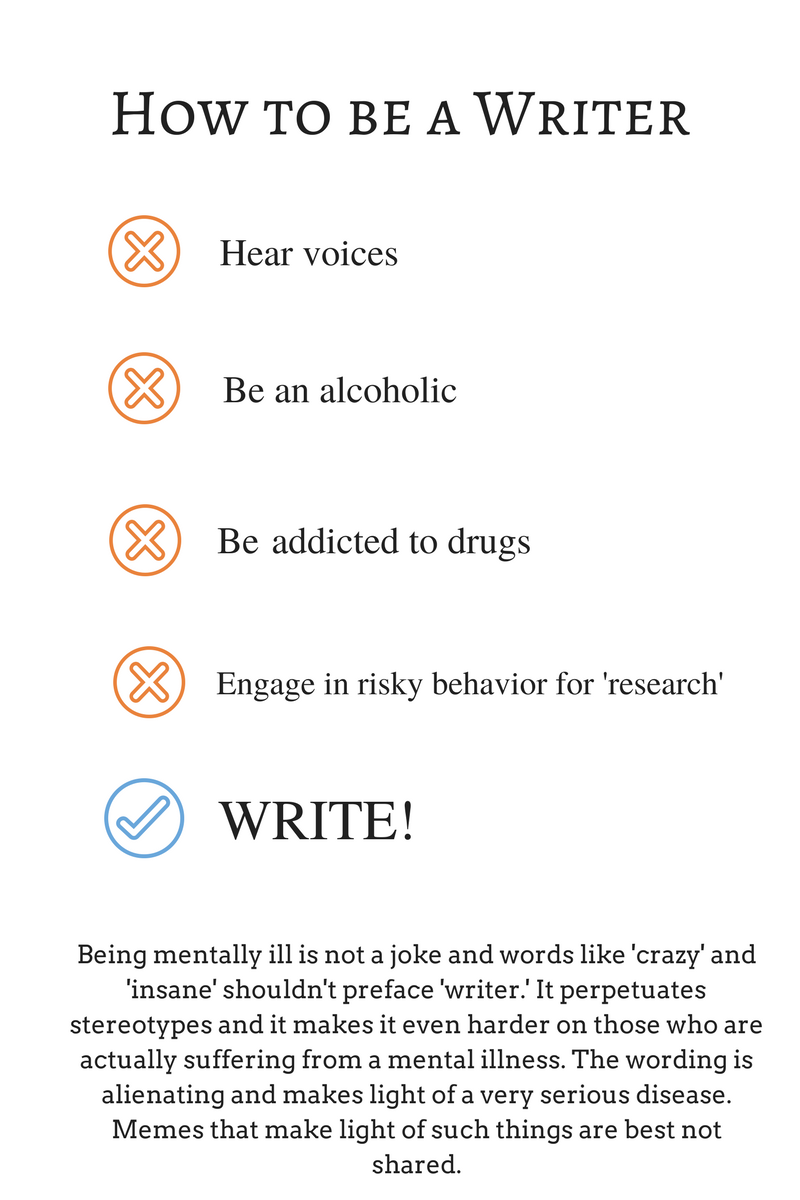
    Some writers have delved into extreme risk-taking behavior for their research but those instances are few and far between. The majority of writers are just as sane as the next person. What makes writers special isn’t ‘hearing voices’ or being addicted to coffee or drinking alcohol like water. It’s the willingness to bare bits of ourselves for the world to see. It’s sacrificing hours, days, weeks, years on works that may never see the light of day. Is that crazy or insane? No. It’s dedication to a craft.

    As someone who suffers from a medically diagnosed mental illness that has resulted in being disabled, I find these memes about ‘crazy’ or ‘insane writers’ not just unamusing, but deeply hurtful. You might joke about ‘hearing voices’ but until you’re sitting at you computer and hear someone walk into your house and get up to go greet them to find no one there, or hear someone telling you that you should stick your hand on that hot burner because you deserve to be hurt, or you might as well stab that knife into your gut because you’re worthless, you won’t understand what it REALLY means to hear voices. Being mentally ill means living with this every single day.

    It is not like imagining a conversation between your characters. I How to be a Writerdo that. I know the difference—the vast, vast difference —between two.
    Besides that, when we say writers are ‘crazy’ we’re robbing them of their actual creative mind. We’re relegating creativity to a mysterious mental hiccup that can’t be predicted or nurtured. This is a grave mistake. We need to emphasize that creativity is not some mysterious, ethereal muse that can only be summoned if insane or inebriated. It is something that can be actively nurtured and grown. Creativity means hard work, dedication and the willingness to learn.

    Some of you are probably rolling your eyes and muttering about my being ‘overly sensitive’ and ‘not getting the joke.’ I do get the joke. Sometimes I even joke about being crazy. I am crazy. I take meds for it. But my crazy is a disease. Something that is trying to kill me. Read that again. This disease would KILL me without treatment. I’m sorry but I’d rather you not joke about my life. If I chose to do so, that is one thing, but please—some respect.

    This is my personal plea to you, my fellow writer, to not share memes that make fun of being mentally ill. There are plenty of other, much funnier, memes about writing to share.

    49d9da07acf06ad615ae099ac4177a66


    Characters · Going Over the Rainbow · lgbt · mogai · writing

    Going Over the Rainbow: The Diversity Dilema

    GoingOver theRainbow (1)

    Ever since BookCon 2014 diversity has become one of the new buzz words around the publishing industry and among writers. The #WeNeedDiverseBooks tag showed a massive outpouring of support and desire for diversity in children’s books. While at the time the movement was primarily focused on cultural diversity it has grown over the last couple of years to reflect the need for all kinds of diversity; racial, physical ability, mental illness, sexual orientation and gender identity, and not just in children’s books. While this has been needed for years and nearly everyone your meet acknowledges this to some degree, there has been some push-back. Some authors felt as though they were being forced to write characters that might not fit their stories.

    Thus came the rise of tokenism, diversity quotas and many instances of misrepresentation as well meaning authors attempted to correct their lack of diversity. Others refused to add diverstiy, citing the fear of getting it wrong. While the We Need Diverse Books campaign is crucial in highlighting where the industry lacks, it has not helped authors write more diversely.

    Writing with diversity is something that every author should strive for. Yet, there isn’t much out there to show you how to do so. I’ve mentioned before, there are some stories that are not ours to tell. Jami Gold had a very helpful blog post about writing more diversely and I myself have written about it in the past. Yet there still seems to be a lot of confusion about what it means and how to go about it.

    Especially how to go about it.

    So, to that end I’ve developed a worksheet that you will hopefully find helpful in writing more diversely without falling back on stereotypes or feeling as though you’re just filling a perceived quota. The following info graphic is a shorthand version of the worksheet and is something I hope you’ll find both useful and educational.

    Diversity Graphic

    The Diversity Double Check (Info-graphic text)

    • Are you part of the minority you are writing about? Yes or no?
      • Yes. Awesome. Keep up the good work. Your story needs to be told.
    • No? Do you have access to people who are part of this minority and are you willing to ask questions and do research? Yes or no?
      • No. Please reconsider your stance. Writing truly diverse characters comes from learning about others and being willing to set aside our own assumptions.
    • Yes. Good. You’re headed in the right direction. Now, is your character’s story directly related to their experience as a minority? Yes or no?
      • Yes. Please take a step back and think about why you feel qualified to write about this experience. This is not a situation where empathy can help you write authentically. In order to write this you must have experienced it.
    • No. Alright. Are they the only character in the story representing their minority? Yes or no?
      • Yes. Caution! Why is this the case? You need to have a very compelling reason for this otherwise you may not be showing true diversity.
    • No. Good. You are on your way to a diverse cast. Now, do they have a stereotypical background, occupation or role in the story? Yes or no?
      • Yes. Caution! Why is this the case? You need to have a very compelling reason for this otherwise you may not be showing true diversity.
    • No. Awesome. Last question. Do they die? Yes or no?
      • Yes. Caution! Why is this the case? You need to have a very compelling reason for this otherwise you may not be showing true diversity.
    • No. Fantastic. You are well on your way to a diverse and well represented cast.

    The questionnaire worksheet was created to help you ensure your story is diverse without resorting to tokenism or filling a perceived quota. You might find the answers to some questions uncomfortable. All this means is that you’ve uncovered internalized bigotry. This is not a reflection on you, but on the culture and society in which you’ve been raised. Knowledge is the first step to overcoming this perceived default state.

    Even those of us who are part of a minority often find ourselves defaulting to white straight cis-gendered characters simply because this is what we see the most. It will take work to overcome this. The worksheet will help you find ways to incorporate diversity into your story—not effortlessly—but hopefully, seamlessly.

    It will start you off with big picture questions about your story as a whole, from there it will take you to character specifics to help you better grasp the ways in which to reflect diversity. Lastly, there are a couple of exercises to help you get your muse used to the idea of writing diverse characters. This is not a quick fix thing. You will have to work at this, just like any other aspect of writing. It will take practice and you are going to make mistakes. It is part of learning and being a writer. But, I know you can do it and it will be awesome.

    Diversity Worksheet generic (PDF)

    Diversity Worksheet generic (docx)

    Do you have any questions about how to incorporate more diversity into your stories? Have you found writing diversely a challenge? What about it feels challenging to you? What other kinds of worksheets or help would you like to see from me?

    If you enjoy my posts please consider supporting me on Patreon. I would also be very happy if you would Buy Me a Coffee if you feel so inclined.

    Characters · Going Over the Rainbow · lgbt · mogai · writing

    Going Over the Rainbow: Gay Male Characters

    GoingOver theRainbow (1)

    With the end of a tumultuous and tragic Pride month there are more concerns than ever about how gay men are represented in media. So how can you, as a responsible author, help dispel many of the harmful stereotypes that lead people to commit horrible atrocities? By accurately and sensitively writing gay men. Please allow me to offer a few words of advice on this.

    Gay/Homosexual Male: A man who is primarily attracted to other men to the exclusion of other genders.

    Developing a Gay Character

    So, how might you go about creating your own gay character? These questions might help you discover why your character has chosen this identity for themselves and how it impacts their life and relationships.

    • How do other characters react to your character’s orientation? How does your character react/respond to these reactions?
    • How does the society in your story react to gays? How does this affect your character? What assumptions do others have about gays/your character?
    • When did/will your character realize that they were attracted to males? How does/will your character think/feel about this? Is the realization because of a specific event, a gradual understanding/coming to terms, etc?
    • How does your character express their gender, whether by choice/effort or naturally, in terms of presenting, passing, self-image and comfort? Do they express their gender a certain way in the hopes of finding other gay men?
    • How does your character tell people about being a gay man (if they tell people at all)? If their coming out to their parents had a negative impact has this changed how they approach others about the subject?

    Writing a Gay Character

    As with writing any character, their sexuality is just one part of their whole identity. When writing your gay character here are a few things to keep in mind:

    • You can have your character specifically state they are gay. This will help the reader understand where your character is coming from. Having other characters react and ask questions will help mitigate an info dump. Many readers will reject a queer coded character unless it is specifically stated, but this is your decision to make.
    • Before writing a coming out story think carefully about whether or not this is your story to tell. Every person’s story is different and if you yourself are not a gay man this might not be your story to tell.
    • Do let your character have close intimate non-sexual/non-romantic relationships with characters of all genders. Being gay doesn’t mean your character will be attracted to every man they meet. Be clear on character intent and watch wording to avoid confusing your reader.
    • Try to avoid making your character gay simply as a plot device. It should be an integral part of who they are, not a quirk.
    • It might be best to avoid having them be a so-called ‘flaming gay’ as this can perpetuate harmful attitudes toward femininity and can promote the idea that gay men want to be women. If you choose to write a such a character please be careful of using feminine stereotypes for their characterization.
    • Be very careful about having your gay character die, suffer tragedy or mental illness as this is an incredibly harmful trope and should be handled with the utmost care.
    • Be mindful of the character’s ‘gaze’ or how they describe other characters as they can end up seemingly sexually attracted to people you didn’t intend and can lead to reader confusion as to their sexuality.


    Things to keep in mind:

    Gay men are increasingly the subject of queer experience appropriation, infantilization and fetishization in stories. The popularity of the ‘slash’ (M/M) genre has perpetuated some very harmful stereotypes, tropes and the continued fetishizing of gay relationships. It has also led to the stereotype of white cis-gendered gay men being the default ‘gay’ seen in media. This excludes gay men of other races and gay trans men. Please always keep in mind you are writing a person, not an orientation.

    Tropes:

    Tropes are tropes for a reason and most of these are not bad in and of themselves, however like a lot of tropes they often perpetuate harmful stereotypes and thus should be used cautiously. Some of these are problematic in and of themselves and should not be used without extreme caution and sensitivity. These tropes are marked with an asterisk.

    Agent Peacock | All Gays Love Theater | All Gays Are Pedophiles* | All Gays Are Promiscuous* | All the Good Men Are Gay | Always Camp | Ambiguously Gay | Anything That Moves | Armoured Closet Gay | Badass Gay | The Bear | The Beard | Big Beautiful Man | Bury Your Gays* | But Not Too Gay | Camp Gay | Camp Straight | Cast Full of Gay | Closet Key | Club Kid* | Coming-Out Story | Cure Your Gays* | Depraved Homosexual* | Everyone Is Gay | Experimented in College | Faux Yay | Flying Under the Gaydar | Forced Out of the Closet | Gay Aesop | Gay Best Friend | Gay Bravado | Gay Conservative | Gay Cowboy | Gay Groom in a White Tux | Gay Guy Seeks Popular Jock | Gayngst | Gym Bunny | Have I Mentioned I am Gay?: | Have You Tried Not Being a Monster?* | Hello, Sailor! | If It’s You, It’s Okay | Lover and Beloved | Macho Camp | Magical Queer | Manly Gay | Nobody Over 50 Is Gay | Sissy Villain* | Transparent Closet | The Twink | Word of Gay: Word of God*

    Gays in Fiction

    Gay men have been written about since the 1st Century and have been a constant fixture in human society all through the ages. A list of books featuring appropriate and accurate representation of gay men is a subject for debate.

    Where We Are on TV 11

    Lists of LGBT Fictional Characters  

    Famous Gay Men in History

    Alexander the Great

    Michelangelo

    Leonardo da Vinci

    Oscar Wilde

    Alan Turing

    Emperor Hadrian

    Baron Friedrich Wilhelm von Steuben

    Babur

    William Lygon, 7th Earl Beauchamp

    Cyrano de Bergerac

    Leonard Bernstein

    Marlon Brando

    Ferdinand I of Bulgaria

    Caligula

    Jean Jacques Régis de Cambacérès

    Truman Capote

    Giacomo Casanova

    Pyotr Ilyich Tchaikovsky

    Tennessee Williams

    Further Reading:

    The Critical Media Project: LGBT

    Gay Representation in Media by Dustin Bradley Goltz

    Reinventing Privilege: The New (Gay) Man in Contemporary Popular Media

    What Led to Lexa: A Look at the History of Media Burying Its Gays

    Going Over the Rainbow: The Trope Trap

    Going Over the Rainbow: Hot for You

    Is there anything you feel I’ve left out? How would you handle writing a gay man? Have you ever written one? If you haven’t, would you consider it?

    If you enjoyed this post and would like access to exclusive content please consider supporting me on Patreon.