archetypes · Characters · writing · Writing FUNdamentals

The Non-Traditional Hero: Part One

Art by Drew Melton

Last week I discussed the alpha character role and the trap of stereotypical heroes. So what is a traditional hero? Often in fiction, especially romance, the hero is what is termed an alpha male, which I discussed in last week’s post. The often hypermasculine and overly sexualized characters (male and female) in media, while popular, are becoming cliche.

So what makes a non-traditional hero?

First let’s break down what a hero is and what makes them a hero.

hero

[heer-oh]

noun, plural heroes;

  1. a man of distinguished courage or ability, admired for his brave deeds and noble qualities.
  2. a person who, in the opinion of others, has heroic qualities or has performed a heroic act and is regarded as a model or ideal: He was a local hero when he saved the drowning child.
  3. the principal male character in a story, play, film, etc.
  4. Classical Mythology.
  1. a being of godlike prowess and beneficence who often came to be honored as a divinity.
  2. (in the Homeric period) a warrior-chieftain of special strength,courage, or ability.
  3. (in later antiquity) an immortal being; demigod.


hero. Dictionary.com. Dictionary.com Unabridged. Random House, Inc.http://dictionary.reference.com/browse/hero (accessed: May 29, 2015).


One who acts in consciiousness of heart and soul. modern: one who acts on what he/she was tought to do or perform. as in Doctors, astronauts, firefighters, paramedics, etc.. the modern kind of takes away from the true meaning of the word “HERO”.Answer A traditional hero plays by the book, he doesn’t bend or break the law, doesn’t smoke, drink or cuss, will not lie and helps little old ladies across the street. Like Atticus Finch, Roy Rogers, The Lone Ranger, Superman etc… A modern hero may be on either side of the law, will bend or break the rules to his benefit, he may steal, will certainly lie, smokes, drinks, cusses and helps little old ladies across the street. Like Dirty Harry, Lazarus Long, and others. Of course this is only the general differences, both types of heros have the same focal point, the common good of the people.

A hero is a man that is admired for his achievments; that has strength and shows courage to others.

http://www.answers.com/Q/What_are_the_differences_between_a_traditional_hero_and_a_modern_hero

Last week I covered the various character archetypes and how Mad Max doesn’t fit the typical alpha male role. What I want to do this week is discuss the typical hero. The definition of a traditional hero is someone who follows the rules and is courteous and polite. A gentleman, basically. The modern idea of a hero is an anti-hero who only follows rules when it suits them and is more coarse and crude, but still a ‘good’ person. Both the traditional and modern types of hero work for the common good of the people. The alpha male is simply a hyper-masculinized version of either a traditional or a modern hero. This is something that I find unfortunate, because it does a disservice to both men and women in the portrayal of that kind of behavior being the norm. There is nothing wrong with having an alpha male character, provided they’re not the only kind of hero we get to see.

There is more than one way to be a hero, and anyone with enough guts can be a hero if the moment calls for it. Some characters never even think of themselves as acting heroically; they just act. To quote my character Jasper Stanton from The Jeweled Dagger, ‘Heroes act. They don’t wait for things to happen.’

Even a so-called coward can become a hero given the right set of circumstances. Even if they act out of cowardice or self-interest, if the action benefits others it can be deemed heroic. The character’s actual motivation for the act is immaterial because it’s the results that matter.

This is where the concepts of the anti-villain and the anti-hero come in. The anti-hero is almost always motivated primarily by selfishness. An anti-villain is a villain with a conscience: they know they must make the hard decisions and aren’t afraid to make the necessary sacrifice in order to fulfill their goal as long as they themselves are not the sacrifice. It is that difference which makes them a villain. Villains and heroes are just two sides of the same coin. A character who believes themselves to be the hero is really the villain if the results of their actions are harmful, though they are often considered to be a hero by some.

An example of this is Rozzen Barbeaux, an original character in my Thief fan fiction series which can be found on Archive of Our Own. She is powerful, driven, in control and incredibly intelligent. She is publically working to better the City, to bring order to the chaos created by the events of the game. She was previously an altruistic corsair who toppled tyrants and oppressive regimes. Many of the wealthy citizens of the City see her as a hero, and their last hope to stem the chaos and bring order. To Garrett and the common people of the City she has become another oppressive tyrant like those she used to fight, and is the main villain of the series.

There are always two stories in every conflict, and which side is which is often a matter of perspective. The same would still apply even if the harmful results were accidental instead of deliberate.

Each archetype I listed last week possesses a core moral value, that inner decency that drives all their choices and decisions. These archetypes are a good starting point for creating a character but, like a core moral value, they must be expanded upon to fully develop a character that is not a stereotype.

Mad Max from the movie Mad Max: Fury Road is a good example of a non-traditional hero, as is his counterpart Furiosa. Neither fits the commonly defined hero role. Stevesbootyshorts on Tumblr made an excellent observation:

Hardy’s Max is traumatized, he is twitchy, non-verbal, and is haunted by hallucinations/flashbacks. Despite this, he listens to the other characters; when the women decide to trust Nux, he trusts their judgement. He’s very obviously afraid. He is far more viscerally traumatized than anything you typically see out of male action stars.

The film completely undermines the male action hero, both by having the women be the true propelling force behind the film’s action, and by having a traumatized action hero who is actually traumatized. http://stevesbootyshorts.tumblr.com/post/119879908308/i-think-one-of-the-things-i-loved-the-most-about

When I began planning The Jeweled Dagger I knew I didn’t want either of my main characters to be stereotypical or to even fit neatly into an archetype. I knew it was going to be a non-traditional romance as well, featuring characters from the orientation and gender identity spectrum who you don’t see often in fiction.

Jasper Stanton at first glance might seem like your typical dashing hero and he strives to be what he thinks of as the ideal. It’s actually one of his flaws. He’s distinctly uncomfortable in a leadership role and when he’s promoted to Captain he thinks it’s a prank. He’s out of place at the Royal Court and is desperate to fit in and gain the approval of those around him. He’s a flirt but doesn’t actively pursue a sexual relationship and even rebuffs those who seek one with him. He asks for help when he knows he’s in over his head. He is terrible with a sword and pukes if he has to deal with bloody wounds. He endures abuse because he thinks he deserves it.

Not exactly your typical hero.

Then we have Lafayette Goddard, who is more of an anti-hero, but still not typical. Living a dual life at Court, they are highly skilled as both a spy and an assassin. As Genevieve they are just as assertive and capable of violence as when they are Lafayette. They are also very focused on maintaining appearances at Court, especially as Genevieve, and they will go to great lengths to protect their reputation. As Lafayette they work to remain in the background but they don’t mince words or insults. They prefer to work alone and refuse help even when it’s offered and needed. Relationships are merely tools to them and they actively use others’ interest in Genevieve to acquire information.

Also not your typical hero, anti or otherwise.

For comparison there is Adrian Barbeaux, from the Thief fan fiction I mentioned previously. He is a Warrior. Literally. Adrian is a Captain of the City Watch and the quintessential hero. He’s courageous, protective, patient and kind to a fault. He risks everything to save Garrett, at first simply because he feels Garrett’s treatment is unjust, even for a known thief. Later he stays with Garrett because he’s come to respect and admire him. Even when events ultimately lead him to a horrifying decision he decides against putting his tormenter to death.

What saves him from being a stereotype is the way he goes beyond the archetype. Here is it defined according to Tami Cowden at All About Romance:

The Warrior

This man is the reluctant rescuer or the knight in shining armor. He’s noble, tenacious, relentless, and he always sticks up for the underdog. If you need a protector, he’s your guy. He doesn’t buckle under to rules, or and he doesn’t go along just to get along.

Examples of Warriors? Dirty Harry, and most any Steven Seagal character. Check the Die Hard movies too. For a lighter version, try TV’s Hercules. Most superheroes are Warriors .

In romance, Suzanne Brockmann and Linda Howard write Warriors. Rosemary Rogers favors this type, too. Trap this man in a basement and his reaction is going to be pure outrage.

He’s a protector, so his focus will be getting her out. But once they’re out, the villain better start running. The Warrior will hunt him to the ends of the earth.

Forget about rescue. This man is the cavalry.


So how did I make sure Adrian didn’t fall into the stereotypical hero trap? I gave him flaws and quirks that help round him out. He takes charge when he needs to but always considers Garrett’s best interest first, including not trying to take Garrett out of his comfort zone or trying to change him. Though this has led to him assuming he knows what is in Garrett’s best interest even when Garrett disagrees. I even took some of his ‘good’ qualities and amped them up until they became flaws. Like his kindness. How can kindness ever be a flaw? When it gets to the point Adrian allows himself to be manipulated and/or abused because he’s too nice. Even his protective instincts can be taken to the point they become not just overprotective but obsessive.

As I mentioned earlier, every hero has the potential to become a villain if any one trait is taken too far. We can use this duality and potential for mistakes to make our heroes more relatable and less stereotypical. Archetypes are a great starting place to build characters, but can become limiting if our characters never go beyond their original archetypes.

These are some examples of both typical and atypical heroes, but how do you go about creating an non-traditional hero? I’ll take you step by step through the process next week.

Have questions or comments about the examples? Please let me know in the comments. Is your character creation process different? Do you like to mix and match archetypes? Do you have a favorite go-to archetype you prefer writing? Have you recognized some archetypes among your favorite characters? Who are they?

Writing FUNdamentals

The Alpha Character Role and Mad Max

The Alpha Character Archetype gets a lot of hype. Especially in romance, er well in most genres. I personally find it very cliche and it is something I avoid. But why, you ask? Let me explain.

The Alpha Character Archetype

Most of the time when you mention an alpha male people immediately think of wolves. This is both unfortunate and scientifically incorrect. Wolves do not have a pack dynamic that includes the concept of an alpha. (http://io9.com/why-everything-you-know-about-wolf-packs-is-wrong-502754629)

The quintessential alpha male is often portrayed as the ultimate hero, the man every male should strive to be (http://princesswithapen.hubpages.com/hub/How-to-be-an-alpha-male-Typical-characteristics-personality-traits-and-behavior-of-an-alpha-male). Tami Cowden broke down the eight types of heroes aka alpha males in her post  We Need a Hero: A Look at the Eight Hero Archetypes (http://www.likesbooks.com/eight.html).

  • The Chief
  • The Bad Boy
  • The Best Friend
  • The Charmer
  • The Lost Soul
  • The Professor
  • The Swashbuckler
  • The Warrior

But what about the women? What types of character roles to women generally get?

Again Tami Cowden breaks down the most popular types for us in her post The Women We Want to Be: The Eight Female Archetypes (http://www.likesbooks.com/78.html)

  • The Boss
  • The Survivor
  • The Spunky Kid
  • The Free Spirit
  • The Waif
  • The Librarian
  • The Crusader
  • The Nurturer

Most of these types share certain traits that make them an alpha character (The Best Friend and Waif excluded). Jami Gold in a recent post (http://jamigold.com/2015/05/what-is-an-alpha-heroine/) outlined these traits as follows:

  • Won’t Fight just to Fight
  • Doesn’t Wait to Be Led
  • Has Strong Communication Skills
  • Has a Strong Presence
  • Makes Decisions
  • Is Less Emotional
  • Looks Out for Others and Solves Problems
  • Commands Respect
  • Doesn’t Panic
  • Is Focused
  • Isn’t a Doormat
  • Might Struggle with Asking for Help
  • Is Less Inhibited in Her Sexuality
  • Doesn’t Need the Approval of Others
  • Isn’t a Slave to Fashion
  • Isn’t a Social Butterfly
  • Has a Good Sense of Humor
  • Takes Care of Herself


Reading through those lists, do you see an issue? Yes, these are all stereotypes. Which is basically what archetypes are: stereotypes we can use as starting points to creating whole characters. However, some of these are so overused they are becoming cliche. Like the Waif or the Chief, we’ve seen them so often as soon as we realize that’s what a particular character is we already know what’s going to happen. While the traits are desirable in and of themselves no character is going to have all of them and it’s not even necessary to have any of them to have a heroic character.

The Archetypal Rut

So what can we do to break out of the archetypal rut? Let’s look at the recently released Mad Max: Fury Road for some good examples of how to mix it up. Both Max and Imperator Furiosa at first seem to be alpha characters, gender aside.

At two points in the movie Mad Max: Fury Road both Max and Imperator Furiosa claim to be seeking redemption. They are both haunted by their past, Max is being driven insane with guilt and suffers from what appears to be PTSD, flashbacks and hallucinations. Furiosa’s past is left to our imagination but her drive to return to the Green Place and recover what she lost is all we need to know.

They neither one find their redemption by the end of the movie. Not redemption as we might think of it. Their character arcs are static in that they remain who they are from start to finish. It’s the world that changes around them. They both transform everything they touch for better or for worse. As expected sparks fly when these two encounter each other. And not the sexy kind.

Max and Furiosa at first glance seem to fit the alpha character archetype. Strong, determined, unapologetic, take charge and unswayed by emotion. Then we quickly see the archetype for both males and females subverted in a number of ways.

‘Mad’ Max is mentally ill. Furiosa is disabled. Max is routinely beaten to a pulp and is never at any point in charge of the situation. Furiosa is the de facto leader as the driver of the war rig and makes the decisions but when it becomes apparent that things are not going well she lets the others have a say. She’s not afraid to seek help from those she knows she can trust. Max seeks help, at first by trying to demand it and then accepting it when it’s offered. Max spends the first third of the movie muzzled and mostly speechless. Furiosa’s words are few and carefully chosen. They both have moments of panic driven by fear and the chaotic situation happening around them. Through it all they both react to each other as two people who have found kindred spirits, hardened by what the world has made them and determined to survive at all costs. There is no male/female dichotomy here. Simply people struggling to exist in a world ruined by greed and save what matters to them.

In short they are wholly human and utterly believable in a situation that seems unbelievable.

The one character who gets a redemption arc that isn’t being talked about is Nux. He starts out as a sickly war boy, dying and reliant on a blood transfusion from his ‘blood bag’ to keep functioning. I won’t spoil his arc but it’s beautiful and very poignant.

Even Immortan Joe is given humanity when we get to see him grieving the loss of a child and how he keeps a piano and other ‘unnecessary’ items locked in a vault. For his depravity he knows what makes us human.

Archetypes, like tropes exist for a reason, but like tropes they can fall into cliche and should never be used solely on their own to create a character. When looking at the traits for a hero don’t be afraid to go against the grain and let them have their flaws, lots of them. Let them show their suffering but not be conquered by it. Let them be humble and relinquish leadership but never relent on doing what is right. Don’t be afraid to make them human and don’t be afraid to go against the archetype.

Next week I’ll discuss the issues with the alpha male/female dynamic and why I think it’s something to be avoided especially in romance.

Uncategorized

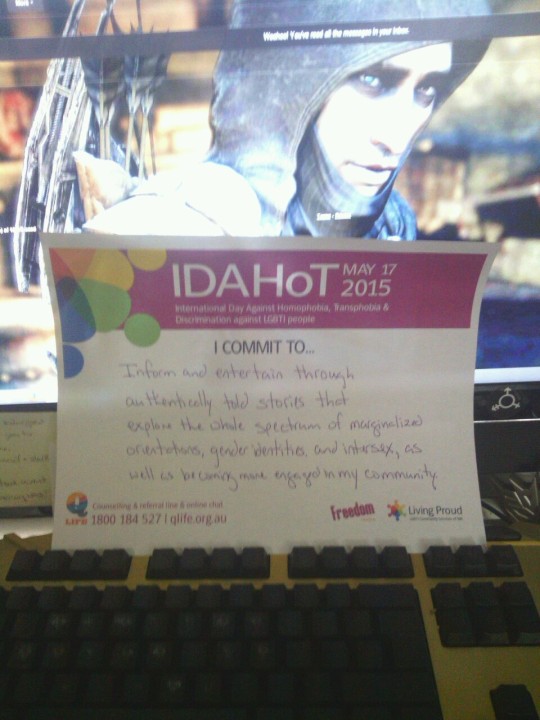
International Day Against Homophobia, Transphobia & Discrimination against LGBTI People

Above is my commitment for this year and I thought I’d expand on it a bit because I find the choice of wording isn’t as inclusive as it should be. You might notice the I used the MOGAI definition in my statement. I feel this is much more inclusive and less cumbersome than the LGBT+ acronym. So it will also be my goal to make MOGAI more visible and to promote its use so that asexuals and others not included in LGBT will feel a part of the community.

If you have suggestions on ways I can be more inclusive in my writing, I welcome your comments.

poetry

The Keeper and the Kept

Can you handle the blood?
Is it something you hate?
Does the violence excite you?
Am I too twisted and broken for you?
Or is that why you keep coming back to riffle through the pages where I live?
Returning to see if I will change,
if the villain can become the hero?
You see all my flaws,
all my hidden thoughts,
yet you keep returning.
You have fingers as soft as the paper they caresses,
eyes deeper than the black
beyond the edge of the universe.
You twist your hair as you read of my trials and tribulations.
You bite your lip as I am wounded and left to bleed.
You call my name in your sleep.
You love me,
you hate me,
you want me,
you rape me.
I suffer gladly through it all.
Just hoping you will return to do it all again.

excerpt · gay romance · lgbt · mogai · short story

Just Your Average Everyday Romance

Yes, it’s Upworthy. Chill. I liked this because this is exactly why I am writing stuff like The Jeweled Dagger and The Silver Peacock series. I want to read about people like me and I know there are a lot of us out there who want the same.

We deserve amazing adventures featuring characters who are as real and vibrant as we are.

I’m very excited about both The Jeweled Dagger and The Silver Peacock. Each feature a broad spectrum of orientations and gender identities but that’s not the sole focus. There are plenty of literary novels that splendidly detail the struggles of being different. No, my books are entertainment that just happens to feature characters who are not heterosexual or even cisgender.

If you are interested you can read the first in The Silver Peacock series for only $0.99 on Kindle, or support me for as little as $1 a month on Patreon and get access to all kinds of freebies and exclusive content.

Here is a sneak peek at part of a scene from Chapter 16 of The Jeweled Dagger.


“It’s not polite to eavesdrop on private conversations.”

Genevieve jumped at the voice in her ear and turned. Roderick smirked at her and Genevieve wished she could slap it off his face. As much as she wanted to she couldn’t just deck the man and leave. She couldn’t afford the scandal that would cause. It had taken her years to gain the standing she had at Court as the Marchioness. One mistake and it would all be for nothing. Her stomach tightened uncomfortably at the thought of playing along with Roderick’s delusion. It wouldn’t be the first time she’d used someone’s romantic interest in her to gain access to information. It just wasn’t something she generally found pleasant.

No. She couldn’t, not with Roderick. Not only was the risk too great, she simply couldn’t. She did many terrible things, things that seared her conscience and gave her nightmares, but she drew the line at this. She’d kill the man before willingly leading Roderick on. Galey had taught her just how quickly things could spiral out of control. Right now she needed to regain command of the situation.

“I don’t know what you are referring to. I am simply enjoying a quiet moment to refresh myself.” Genevieve was glad she still had her drink. The suspicious look didn’t leave Roderick’s eyes.

“Come walk with me. There are some things I wish to discuss.”

asexual · mogai · short story · writing

Free Comic Book Day Fun and a New Series

Silver Peacock Pearl

Yesterday I had the very fun priviledge of being a guest artist at a local comic book shop for Free Comic Book Day. I don’t often get a chance to talk with prospective readers … or people in general, so yesterday was a bit out of my comfort zone. That being said, I had a fabulous time. The local graphic artist I sat beside was not only talented but very interesting to talk to as well. Our range of subjects was pretty intense, from art and what it means to be an artist, to feminism and religion all the way to video games. It was fabulous and I plan to keep in contact with him. I also had the chance to meet a couple of people from the community, in particular one lovely young trans woman. We got to talking and I told her about my new series The Silver Peacock and how it will explore the whole spectrum of gender and orientation. To see her face light up when I told her there were trans men and women in the stories made my day.

This is one big reason why I am writing these stories. Not only do I love the characters and all their quirks, I know there are people out there who have never read a story with a character like themselves. My greatest hope is that people will read these and not only be entertained but find characters who they can relate with.

With that I’d like to introduce the first of the series: Pearl. Below is a short excerpt. You can find the full novella on Amazon for Kindle.

Pearl stared up at the dilapidated building. The three story house had once been grand, the fluted columns and ornate shutters on the large windows spoke to that. But like a once popular courtesan the years had done their damage; weathered wood showed under peeling paint, shutters hung from rusted hinges and only a few windows still had any glass. In some ways it reminded her of the woman waiting next to her. At one time beautiful and popular, now faded and clinging to the past.

“Just how old is this dump?” She turned to look at Evel Jorde. Her mother was tall and imposing. The years were just starting to settle over her, a spider’s web of fine lines showing around her eyes and mouth, the once white-blonde hair now more snowy than golden. The dress was carefully chosen to complement her coloring and enhance the slender figure. Pearl had her mother’s height, blonde hair and the same slim build but so far little of her ruthlessness, or so she liked to think.

My other short story The Regular is also available on Kindle.

The Regular Cover