Disclaimer: This post frankly discusses some aspects of sex and sexuality that some might find triggering including sexual kinks, fetishes and paraphilias. Please do not read further if you find any of these subjects triggering.
If you’ve been around romance writing for long you’ve undoubtedly ran across a number of characters with kinks and fetishes or even paraphilias (and no I will not discuss a certain well known book that shall remain nameless).
But what do these have to do with gender identity and sexual orientations?
Most of us go through life never thinking much about our gender or how we express it. We might feel it is something we were born with, something absolute and immutable. We might think there are only two genders and that we are one or the other.
‘But aren’t there only two genders?’ I hear you asking.
Nope. Male and female are only two ends of a vast spectrum. Also it helps not to confuse gender with sex. Sex is biology/physiology and even then there are intersex persons whose bodies are not clearly one or the other.
“When we think of gender, we often think of male or female; that’s only half of understanding gender. The denotations of male and female actually refer to biological and physiological sex. Gender is a sociological construct of values, ideals, and behaviors about what it means to be either male or female, and are often regarded in terms of masculine or feminine, respectively. Many people use sex and gender interchangeably, but one does not have to be male to identify as masculine, and vice versa.”
In addition to exploring the sexual orientations in the coming months we’ll be looking at different gender identities . We’ll discuss gender identity and expression and how you can use these to make your characters more diverse.
‘Why? Can’t I just have my character be male or female?’ You ask.
Of course you can but you’re here so you’re obviously interested in being more diverse in your writing.
The Culture of Gender
Ripley, the main character in Alien originally was to be male.
Have you ever thought about how your favorite book or movie might have been different if the main character had been a different gender? What would have made it different? Why?
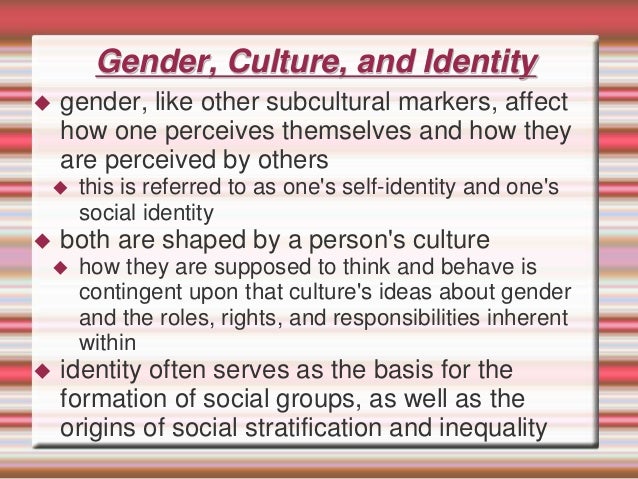
In our society (I’m speaking as someone who lives in the US) identifying as male or female comes with a host of gender specific expectations: men are macho, women are feminine, men don’t cry, women are emotionally compromised, men like cars, women like shoes, ad nauseam. These gender stereotypes are social constructs and have little basis in biology or psychology.
“Gender theorists point to the variations in gender roles observed among different cultures in arguing that gender – our masculinity or femininity – is a social construct rather than an innate biological characteristic. Because there is no universal “right” way to be a man or a woman, they argue that our ways of “doing gender” are shaped by social cues and influences.”
This is why we as writers need to be more cognizant of the variety around us. Challenging these stereotypes can help us broaden our social consciousness and that of our readers.
‘But why should I worry about gender when I only write men or women?’ You wonder.
Because even cisgendered persons, or persons whose gender identity aligns with their gender assigned at birth, are impacted by society’s gender culture and expected to conform to certain norms. It’s not enough to throw a bunch of ‘masculine’ traits into a character’s personality and call her a ‘strong’ female. And conversely taking a female character and switching to masculine pronouns won’t give you the sensitive male you are looking for. They each will have skin-deep traits and no real depth to them.
It’s my hope that you’ll find the following articles interesting and maybe a little enlightening as we study the wide variation of genders and sexualities and how we can accurately write these identities.
If you enjoyed this and would like access to additional content, please consider supporting me on Patreon.
Do you struggle writing a certain gender? Why do you feel that is the case? Have you ever written a character and then decided to change their gender? What prompted the change and how do you feel it turned out?
‘But I don’t write romance!’ I hear you saying. Romance isn’t always about sex and sex isn’t always about romance. A character’s sexual orientation can have a huge impact on how they are treated by society, their family, how they interact with others around them and how they perceive themselves. It can be a source of both internal and external conflict.
‘But I only write straight characters!’ You say. Okay, nothing wrong with that, but why? Why only write straight characters? It’s almost guaranteed that you personally know, at the very least, one person of a different orientation and the likelihood is that the number is much higher. Our lives are filled with diversity and it stands to reason that our stories should be as well.
Diversity is a huge buzz word right now in the entertainment industry and while there is a great focus on it, the actual results have been marginal at best. Unfortunately some well-meaning writers have perpetuated harmful stereotypes, misrepresented an orientation or been less than accurate in their portrayals of queer* persons.
So how can you add diversity and be inclusive without stumbling into the stereotype trap?
Click your heels and we’re on our way.
The first step is to realize writing diversity is not hard. Writing a queer character is no harder than writing any other character because, first and foremost, you are writing people; not an orientation. A lesbian is not just a lesbian, she might also be a sister, mother, accountant, scientist, police officer, volunteer firefighter or any number of things that make up someone’s identity. Her orientation is just one aspect of who she is, but it is something that helps define her, just as core traits help define personality.
Fearless Defenders #12
The second step is to decide if the character’s story is one for you to tell. As I stated last week, some stories need to be told by writers from that particular background. We should recognize when a character’s story might not be ours to tell, especially if the story centers on experiences or hardships related to their race, orientation, physical ability or mental health. As the term goes, stay in your lane. In other words know when to check your privilege and don’t assume any amount of research is going to give you true insight into their struggles. Instead, support authors who are part of those diverse backgrounds.
Kaidan Alenko is a romanceable option for Commander Shepard in Mass Effect 3
With that being said, there is nothing wrong with including diverse characters. You absolutely should.
The final step in writing with diversity is actually creating a character that is a fair representation. Everyone’s experiences are going to be different and there is no one right way to write a queer character. However, there are most definitely wrong ways to write them.
Over the next several months I will be going through both the sexual orientation spectrum and the gender identity spectrum and helping you to avoid stereotypes and harmful misinformation. My goal is to help you not only understand your characters better but to feel more comfortable writing with diversity. I myself am a queer person. I identify as an agender/nonbinary panromantic demisexual. That’s probably is a bunch of gibberish right now, but I promise, if you stick with me I’ll show you what those labels mean and what they can mean for your character.
The first place we are going to start with is the Character Sexuality Worksheet. I designed this worksheet to help you answer orientation specific questions about your character. This should give you a launching point for your research. I’ve also included two handy flowcharts to help in case you are not sure where on the spectrum your character might fall.
Please feel free to download and print the worksheet for your private use.
Over the next several months I will be exploring each of the various sexual orientations and gender identities in an effort to help my fellow authors write with more diversity. I will be inviting people of other orientations and gender identities to offer their advice and experiences as well. I sincerely hope you find this of value and please feel free to ask questions.
If you enjoyed this and would like access to additional content, please consider supporting me on Patreon.
What orientation you are most curious about? What else would you like know about sexuality, sexual orientation, and gender identity? Have you written a character from the sexual orientation spectrum? What challenges have you encountered in your effort to add diversity to your writing? Do you have any suggestions or comments for the worksheet or upcoming topics? I look forward to hearing from you.
*As someone who identifies as nonbinary and panromantic demisxual, I am comfortable using the term queer when describing myself or my characters. I am aware that many in the community still feel this is an insult. If you do not identify as part of the spectrum, please refrain from using the term.
Growing up in small towns in the middle of the Midwest, I didn’t get much exposure to people of other races. There was not a single African American at the school I went to and only one person of mixed race. I also had no exposure to people who identified as different sexual orientations or gender identities. This meant I felt horribly out of place growing up. I was just weird. It’s taken twenty years, but I’ve finally found where I fit and understand myself. I’ve also learned a lot about others along the way.
Last month Jami Gold brought up the subject of diversity on her blog. Diversity is a huge topic right now, and it should be. We need more diversity in every genre. And by diversity I don’t just mean racially, but sexual orientation, gender identity, neurodivergence, physical ability, all of it. However, we need to when and how to add it so it fits and doesn’t feel tacked on. There is no quota, only authenticity.
This is a good thing when it comes to our characters, especially for characters with diverse elements, as there’s no definitive black, gay, disabled, whatever experience, and therefore there’s no “one right way” to portray those characters. There are, however, wrong ways to portray diversity.—Jami Gold, Writing Diversity: How Can We Avoid Issues?
In a follow up post, Jami also touched on research and being aware of the source of our information. There are plenty of resources on the internet but we need to be aware of who is supplying them and if they are actually part of the segment of the population they are writing about. This can make all the difference in whether or not our portrayal is authentic or othering.
Some stories simply are not ours to write.
Obviously, the most helpful thing we can do to support diversity within the publishing industry is to buy and help promote books from diverse authors. As I mentioned last time, there might be some stories that aren’t ours to tell, so we also need to encourage the success of those authors who can tell those stories.—Jami Gold, Digging into Research: Consider the Source
I write stories with queer* characters and yes many of them are not white, but their race and queerness is part of who they are and the stories are not about either. As a white person it is not my place to write a story about race or racism. It might happen in my stories, but it won’t be the focus because I have never had to deal with it the way so many others do. I cannot and will not write something when I know it is a subject that does not belong to me. No amount of creativity can replace experience with something like this.
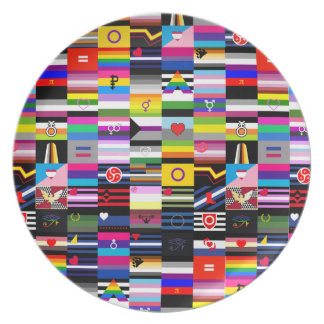
And that leads me to the point of this post. As a queer person I have noticed a lot of authors struggling to write authentically queer characters. The gay romance genre is stuck in the m/m cis white male, coming out trope (not that there is anything wrong with the trope, but … diversity would be nice ^^). That is only one small part of the entire spectrum. The rainbow flag is not the only flag out there. Whether you write romance or not, adding other orientations can only enrich your writing. When done properly.
Pride Flag Collage
Over the next several months I will be exploring each of the various sexual orientations and gender identities in an effort to help my fellow authors write with more diversity. I will be inviting people of other orientations and gender identities to offer their advice and experiences as well. I sincerely hope you find this of value and please feel free to ask questions.
If you enjoyed this and would like access to additional content, please consider supporting me on Patreon.
As always your comments and questions are welcomed below.
*As someone who identifies as nonbinary and panromantic demisxual, I am comfortable using the term queer when describing myself or my characters. I am aware that many in the community still feel this is an insult. If you do not identify as part of the spectrum, please refrain from using the term.
Last week I discussed the alpha character role and the trap of stereotypical heroes. So what is a traditional hero? Often in fiction, especially romance, the hero is what is termed an alpha male, which I discussed in last week’s post. The often hypermasculine and overly sexualized characters (male and female) in media, while popular, are becoming cliche.
So what makes a non-traditional hero?
First let’s break down what a hero is and what makes them a hero.
hero
[heer-oh]
noun, plural heroes;
a man of distinguished courage or ability, admired for his brave deeds and noble qualities.
a person who, in the opinion of others, has heroic qualities or has performed a heroic act and is regarded as a model or ideal: He was a local hero when he saved the drowning child.
the principal male character in a story, play, film, etc.
Classical Mythology.
a being of godlike prowess and beneficence who often came to be honored as a divinity.
(in the Homeric period) a warrior-chieftain of special strength,courage, or ability.
One who acts in consciiousness of heart and soul. modern: one who acts on what he/she was tought to do or perform. as in Doctors, astronauts, firefighters, paramedics, etc.. the modern kind of takes away from the true meaning of the word “HERO”.Answer A traditional hero plays by the book, he doesn’t bend or break the law, doesn’t smoke, drink or cuss, will not lie and helps little old ladies across the street. Like Atticus Finch, Roy Rogers, The Lone Ranger, Superman etc… A modern hero may be on either side of the law, will bend or break the rules to his benefit, he may steal, will certainly lie, smokes, drinks, cusses and helps little old ladies across the street. Like Dirty Harry, Lazarus Long, and others. Of course this is only the general differences, both types of heros have the same focal point, the common good of the people.
A hero is a man that is admired for his achievments; that has strength and shows courage to others.
Last week I covered the various character archetypes and how Mad Max doesn’t fit the typical alpha male role. What I want to do this week is discuss the typical hero. The definition of a traditional hero is someone who follows the rules and is courteous and polite. A gentleman, basically. The modern idea of a hero is an anti-hero who only follows rules when it suits them and is more coarse and crude, but still a ‘good’ person. Both the traditional and modern types of hero work for the common good of the people. The alpha male is simply a hyper-masculinized version of either a traditional or a modern hero. This is something that I find unfortunate, because it does a disservice to both men and women in the portrayal of that kind of behavior being the norm. There is nothing wrong with having an alpha male character, provided they’re not the only kind of hero we get to see.
There is more than one way to be a hero, and anyone with enough guts can be a hero if the moment calls for it. Some characters never even think of themselves as acting heroically; they just act. To quote my character Jasper Stanton from The Jeweled Dagger, ‘Heroes act. They don’t wait for things to happen.’
Even a so-called coward can become a hero given the right set of circumstances. Even if they act out of cowardice or self-interest, if the action benefits others it can be deemed heroic. The character’s actual motivation for the act is immaterial because it’s the results that matter.
This is where the concepts of the anti-villain and the anti-hero come in. The anti-hero is almost always motivated primarily by selfishness. An anti-villain is a villain with a conscience: they know they must make the hard decisions and aren’t afraid to make the necessary sacrifice in order to fulfill their goal as long as they themselves are not the sacrifice. It is that difference which makes them a villain. Villains and heroes are just two sides of the same coin. A character who believes themselves to be the hero is really the villain if the results of their actions are harmful, though they are often considered to be a hero by some.
An example of this is Rozzen Barbeaux, an original character in my Thief fan fiction series which can be found on Archive of Our Own. She is powerful, driven, in control and incredibly intelligent. She is publically working to better the City, to bring order to the chaos created by the events of the game. She was previously an altruistic corsair who toppled tyrants and oppressive regimes. Many of the wealthy citizens of the City see her as a hero, and their last hope to stem the chaos and bring order. To Garrett and the common people of the City she has become another oppressive tyrant like those she used to fight, and is the main villain of the series.
There are always two stories in every conflict, and which side is which is often a matter of perspective. The same would still apply even if the harmful results were accidental instead of deliberate.
Each archetype I listed last week possesses a core moral value, that inner decency that drives all their choices and decisions. These archetypes are a good starting point for creating a character but, like a core moral value, they must be expanded upon to fully develop a character that is not a stereotype.
Mad Max from the movieMad Max: Fury Road is a good example of a non-traditional hero, as is his counterpart Furiosa. Neither fits the commonly defined hero role. Stevesbootyshorts on Tumblr made an excellent observation:
Hardy’s Max is traumatized, he is twitchy, non-verbal, and is haunted by hallucinations/flashbacks. Despite this, he listens to the other characters; when the women decide to trust Nux, he trusts their judgement. He’s very obviously afraid. He is far more viscerally traumatized than anything you typically see out of male action stars.
When I began planning The Jeweled Dagger I knew I didn’t want either of my main characters to be stereotypical or to even fit neatly into an archetype. I knew it was going to be a non-traditional romance as well, featuring characters from the orientation and gender identity spectrum who you don’t see often in fiction.
Jasper Stanton at first glance might seem like your typical dashing hero and he strives to be what he thinks of as the ideal. It’s actually one of his flaws. He’s distinctly uncomfortable in a leadership role and when he’s promoted to Captain he thinks it’s a prank. He’s out of place at the Royal Court and is desperate to fit in and gain the approval of those around him. He’s a flirt but doesn’t actively pursue a sexual relationship and even rebuffs those who seek one with him. He asks for help when he knows he’s in over his head. He is terrible with a sword and pukes if he has to deal with bloody wounds. He endures abuse because he thinks he deserves it.
Not exactly your typical hero.
Then we have Lafayette Goddard, who is more of an anti-hero, but still not typical. Living a dual life at Court, they are highly skilled as both a spy and an assassin. As Genevieve they are just as assertive and capable of violence as when they are Lafayette. They are also very focused on maintaining appearances at Court, especially as Genevieve, and they will go to great lengths to protect their reputation. As Lafayette they work to remain in the background but they don’t mince words or insults. They prefer to work alone and refuse help even when it’s offered and needed. Relationships are merely tools to them and they actively use others’ interest in Genevieve to acquire information.
Also not your typical hero, anti or otherwise.
For comparison there is Adrian Barbeaux, from the Thief fan fiction I mentioned previously. He is a Warrior. Literally. Adrian is a Captain of the City Watch and the quintessential hero. He’s courageous, protective, patient and kind to a fault. He risks everything to save Garrett, at first simply because he feels Garrett’s treatment is unjust, even for a known thief. Later he stays with Garrett because he’s come to respect and admire him. Even when events ultimately lead him to a horrifying decision he decides against putting his tormenter to death.
What saves him from being a stereotype is the way he goes beyond the archetype. Here is it defined according to Tami Cowden at All About Romance:
The Warrior
This man is the reluctant rescuer or the knight in shining armor. He’s noble, tenacious, relentless, and he always sticks up for the underdog. If you need a protector, he’s your guy. He doesn’t buckle under to rules, or and he doesn’t go along just to get along.
Examples of Warriors? Dirty Harry, and most any Steven Seagal character. Check the Die Hard movies too. For a lighter version, try TV’s Hercules. Most superheroes are Warriors .
In romance, Suzanne Brockmann and Linda Howard write Warriors. Rosemary Rogers favors this type, too. Trap this man in a basement and his reaction is going to be pure outrage.
He’s a protector, so his focus will be getting her out. But once they’re out, the villain better start running. The Warrior will hunt him to the ends of the earth.
Forget about rescue. This man is the cavalry.
So how did I make sure Adrian didn’t fall into the stereotypical hero trap? I gave him flaws and quirks that help round him out. He takes charge when he needs to but always considers Garrett’s best interest first, including not trying to take Garrett out of his comfort zone or trying to change him. Though this has led to him assuming he knows what is in Garrett’s best interest even when Garrett disagrees. I even took some of his ‘good’ qualities and amped them up until they became flaws. Like his kindness. How can kindness ever be a flaw? When it gets to the point Adrian allows himself to be manipulated and/or abused because he’s too nice. Even his protective instincts can be taken to the point they become not just overprotective but obsessive.
As I mentioned earlier, every hero has the potential to become a villain if any one trait is taken too far. We can use this duality and potential for mistakes to make our heroes more relatable and less stereotypical. Archetypes are a great starting place to build characters, but can become limiting if our characters never go beyond their original archetypes.
These are some examples of both typical and atypical heroes, but how do you go about creating an non-traditional hero? I’ll take you step by step through the process next week.
Have questions or comments about the examples? Please let me know in the comments. Is your character creation process different? Do you like to mix and match archetypes? Do you have a favorite go-to archetype you prefer writing? Have you recognized some archetypes among your favorite characters? Who are they?
Yesterday I had the very fun priviledge of being a guest artist at a local comic book shop for Free Comic Book Day. I don’t often get a chance to talk with prospective readers … or people in general, so yesterday was a bit out of my comfort zone. That being said, I had a fabulous time. The local graphic artist I sat beside was not only talented but very interesting to talk to as well. Our range of subjects was pretty intense, from art and what it means to be an artist, to feminism and religion all the way to video games. It was fabulous and I plan to keep in contact with him. I also had the chance to meet a couple of people from the community, in particular one lovely young trans woman. We got to talking and I told her about my new series The Silver Peacock and how it will explore the whole spectrum of gender and orientation. To see her face light up when I told her there were trans men and women in the stories made my day.
This is one big reason why I am writing these stories. Not only do I love the characters and all their quirks, I know there are people out there who have never read a story with a character like themselves. My greatest hope is that people will read these and not only be entertained but find characters who they can relate with.
With that I’d like to introduce the first of the series: Pearl. Below is a short excerpt. You can find the full novella on Amazon for Kindle.
Pearl stared up at the dilapidated building. The three story house had once been grand, the fluted columns and ornate shutters on the large windows spoke to that. But like a once popular courtesan the years had done their damage; weathered wood showed under peeling paint, shutters hung from rusted hinges and only a few windows still had any glass. In some ways it reminded her of the woman waiting next to her. At one time beautiful and popular, now faded and clinging to the past.
“Just how old is this dump?” She turned to look at Evel Jorde. Her mother was tall and imposing. The years were just starting to settle over her, a spider’s web of fine lines showing around her eyes and mouth, the once white-blonde hair now more snowy than golden. The dress was carefully chosen to complement her coloring and enhance the slender figure. Pearl had her mother’s height, blonde hair and the same slim build but so far little of her ruthlessness, or so she liked to think.
My other short story The Regular is also available on Kindle.

 Disclaimer: This post frankly discusses some aspects of sex and sexuality that some might find triggering including sexual kinks, fetishes and paraphilias. Please do not read further if you find any of these subjects triggering.





 Bran Lindy Ayres